
Innov Clin Neurosci. 2026;23(4–6):62–63.
by Charles D. Cash, JD, LLM
Mr. Cash is Associate Director of Risk Management at Professional Risk Management Services (PRMS).
FUNDING: No funding was provided for the preparation of this article.
DISCLOSURES: The author is an employee of PRMS. PRMS manages a professional liability insurance program for psychiatrists.
Abstract: This ongoing column is dedicated to providing information to our readers on managing legal risks associated with medical practice. We invite questions from our readers. The answers are provided by PRMS (www.prms.com), a manager of medical professional liability insurance programs with services that include risk management consultation and other resources offered to health care providers to help improve patient outcomes and reduce professional liability risk. The answers published in this column represent those of only one risk management consulting company. Other risk management consulting companies or insurance carriers might provide different advice, and readers should take this into consideration. The information in this column does not constitute legal advice. For legal advice, contact your personal attorney. Note: The information and recommendations in this article are applicable to physicians and other healthcare professionals so “clinician” is used to indicate all treatment team members.
Introduction
In Part 1 of this article, Justin Pope, JD, gave an overview of medical errors in psychiatry, described a systems approach to error causation, and reported factors unique to psychiatry that play a role in medical errors. Common medical errors seen in malpractice lawsuits were identified. In Part 2, we will address preventing and managing medical errors.
Preventing Medical Errors
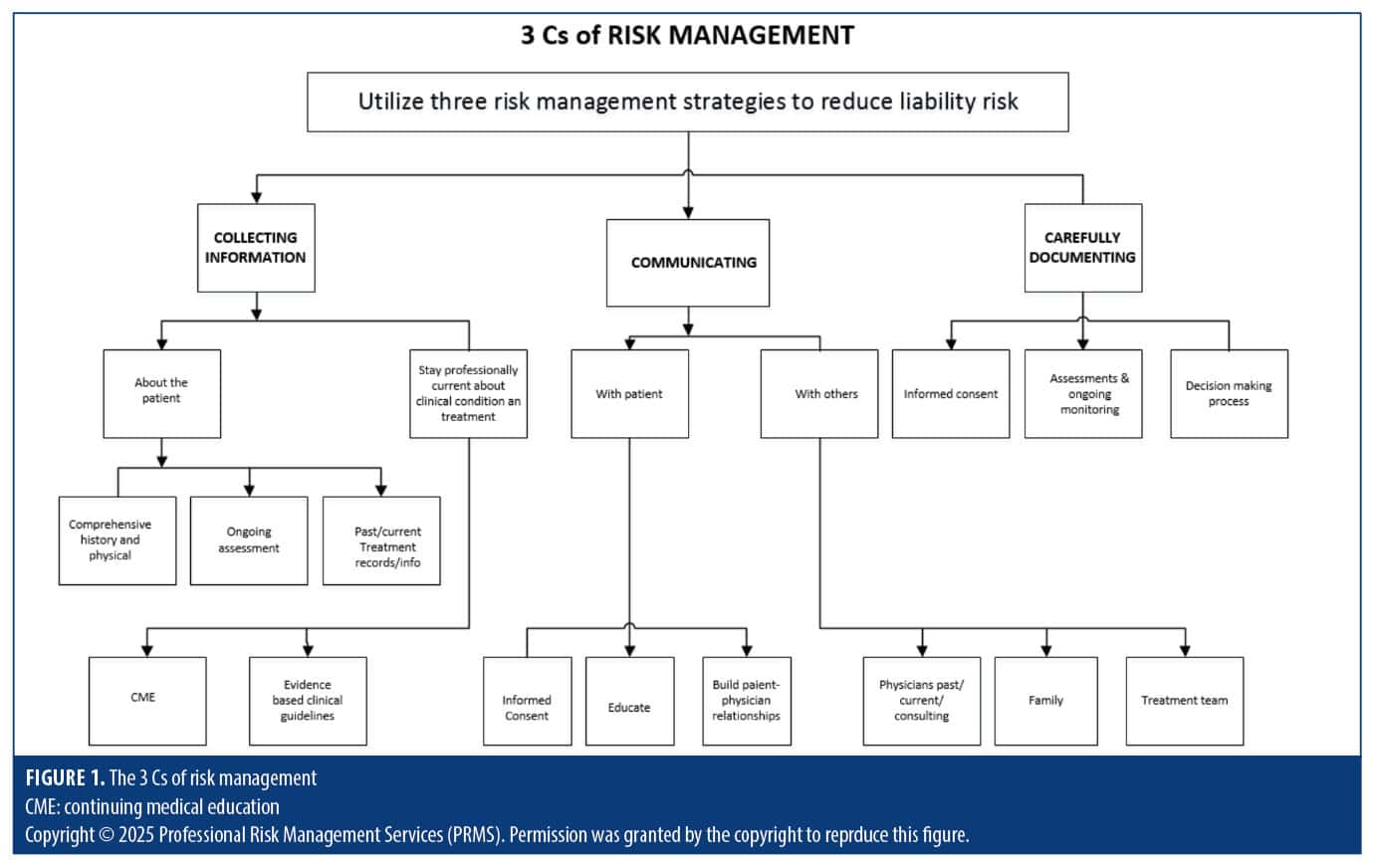
In Part 1, common medical errors alleged in lawsuits against psychiatrists were identified. Providing thoughtful treatment by incorporating the three Cs of risk management (Figure 1) is the first step in preventing medical errors.
For patients at risk of suicide, ongoing assessments and treatment plan development and implementation are key. Clinicians should consider incorporating a reputable, validated suicide risk assessment and treatment guide into their professional practice. To provide for continuity of care, clinicians should document the reasoning behind major clinical decisions and options considered but not taken.
From our psychopharmacology cases, monitoring is key. At appropriate intervals, clinicians should obtain:
- Lithium levels and renal function tests
- Depakote levels and liver function tests
- Abnormal Involuntary Movement Scale (AIMS) testing for movement disorders
- Metabolic disorder screening
- State prescription monitoring program database information
Implementing a reasonable monitoring system in these areas as well as incorporating reputable treatment guidelines into professional practice would prevent many medical errors. Additionally, staying professionally current regarding clinical conditions treated and medications prescribed would increase patient safety and prevent medical error.
Technology. While digital platforms can be useful tools in preventing medical errors, they sometimes are the source of medical errors. In our experience as a medical malpractice liability insurer, we sometimes see cases where:
- Artificial intelligence platforms hallucinate.
- A cursor that is off by a millimeter results in an incorrect medication or dosage choice that leads to patient injury.
- Copy-paste functionality perpetuates error in electronic health records.
- When incorporating technology into professional practice, all related work product should be reviewed for accuracy.
Managing Medical Errors
It is important to recognize that adverse events or outcomes occur in professional practice. The occurrence of an adverse event does not necessarily mean there was error. In discussing an adverse event with a patient, it is important not to jump to conclusions about the presence of medical error. It is important to take the time to make a reasonable determination about whether medical errors were involved. There have been many cases where a provider’s untimely admission of error turned out to be unfounded.
If medical error is confirmed, do:
- Ensure the patient’s clinical needs are met.
- Secure the clinical record.
- Contact your liability insurer and/or risk manager for support.
- Limit your discussions about the event.
- Seek support from the professionals designated to assist with managing medical errors, such as your risk manager or legal counsel.
Do not:
- Make any change to the treatment record.
- Participate in post-event reviews (quality assurance, root cause analyses, or morbidity and mortality conferences) without guidance from your professional liability carrier if privately insured. For clinicians insured by their facility, follow your facility’s specific instructions for participating in the post-event reviews.
- Admit malpractice without guidance from legal counsel or your risk manager.
Conclusion
Medical errors in professional practice often can be prevented by following risk management best practices, including the three Cs: collecting information, communicating, and carefully documenting. Should a medical error occur, providers can take specific steps to reduce their professional liability risk. Understanding how and why an error occurred can guide clinicians’ future patient safety and risk management efforts.