
Innov Clin Neurosci. 2026. Online ahead of print.
Brian J. Ladds, MD, and Lauren A. Kwok, BA
Dr. Ladds is with the Department of Psychiatry, Lincoln Hospital, Bronx, New York. Ms. Kwok is with New York Medical College, Valhalla, New York.
Abstract: Objective: To evaluate whether current evidence supports xanomeline/trospium as superior to other antipsychotic medications for schizophrenia with respect to efficacy or tolerability. Methods: PubMed was searched for English articles published from January 1, 2016, through June 30, 2026, using the terms “Cobenfy,” “KarXT,” “xanomeline,” or “xanomeline-trospium” combined with “schizophrenia” or “psychosis.” Eligible studies were reviewed for study design, efficacy, tolerability, and direct or indirect comparison with other antipsychotics. Findings were synthesized narratively. Results: The search identified 183 records. After title and abstract screening, 29 studies were included, 24 in the primary evidence synthesis and 5 in the secondary evidence synthesis. Xanomeline/trospium demonstrated efficacy vs placebo and possesses a favorable side effect profile, including low rates of extrapyramidal symptoms. However, no direct head-to-head randomized controlled trials comparing xanomeline/trospium with other antipsychotics were identified. Secondary evidence suggested advantages in certain areas, including weight gain, but did not establish superiority in overall efficacy or side effect profile. Conclusion: Xanomeline/trospium demonstrates efficacy vs placebo, but current evidence has not established its superiority over other antipsychotics. This study is limited by the lack of direct comparative studies and limited long-term data. Future head-to-head trials are needed to clarify whether xanomeline/trospium offers advantages over other medications. Keywords: Cobenfy, antipsychotic, schizophrenia, xanomeline/trospium
Introduction
Xanomeline/trospium chloride, marketed as Cobenfy (Bristol Meyers Squibb; Princeton, NJ, US), entered the clinical marketplace in September 2024 for the treatment of schizophrenia. Its approval generated substantial interest as it represents a novel antipsychotic approach that does not depend on direct postsynaptic dopamine D2 receptor blockade. Some have described xanomeline/trospium as “revolutionary,” with claims suggesting that it may provide better symptom relief with fewer side effects than established antipsychotic medications.1
The novelty of its mechanism of action has reflected a significant shift in the focus of research.1,2 Xanomeline acts centrally at muscarinic receptors, including M1 and M4 receptors, while trospium is added to reduce peripheral cholinergic adverse effects. Preclinical and translational literature suggests that muscarinic receptor agonism may regulate dopamine signaling in areas implicated in psychosis.2,3
However, the distinction between efficacy and superiority is clinically important. For xanomeline/trospium to be considered superior to other antipsychotic medications, evidence would be needed showing improved efficacy, improved tolerability, reduced extrapyramidal symptoms (EPS), fewer metabolic adverse effects, lower discontinuation, or improved relapse prevention. Direct head-to-head comparative trials of xanomeline/trospium against established antipsychotic medications have not yet been published as of June 2026. This limitation is especially important because schizophrenia is typically a chronic illness requiring long-term treatment. Older antipsychotic medications therefore continue to have an important role, especially in maintenance therapy, as they have been studied extensively.4–6
Because direct head-to-head trials may be unavailable early in a medication’s clinical development, indirect comparisons can also help guide clinical interpretation. Network meta-analyses and other indirect comparison methods can compare efficacy and tolerability signals across placebo-controlled trials of different medications. However, these comparisons are limited due to heterogeneity in patient populations, study design, duration, outcome measures, and how adverse effects are assessed.7–11
This review aims to evaluate whether published evidence supports the superiority of xanomeline/trospium over other antipsychotic medications. The primary objective was to assess original clinical evidence of xanomeline/trospium in the treatment of schizophrenia. A secondary objective was to summarize literature that contextualizes xanomeline/trospium against other antipsychotics using placebo-controlled data.
Materials and Methods
This review was conducted in accordance with the Preferred Reporting Items for Systematic Reviews and Meta-Analyses (PRISMA) 2020 statement.12 The objective was to evaluate whether published evidence demonstrates that xanomeline/trospium is superior to other antipsychotic medications in the treatment of schizophrenia.
PubMed was searched for English-language articles published from January 1, 2016, through June 30, 2026. The search terms were selected to capture the medication’s brand name, investigational name, and generic components. The search terms were “Cobenfy,” “KarXT,” “xanomeline,” “xanomeline-trospium,” or “xanomeline trospium,” combined with “schizophrenia” or “psychosis.”
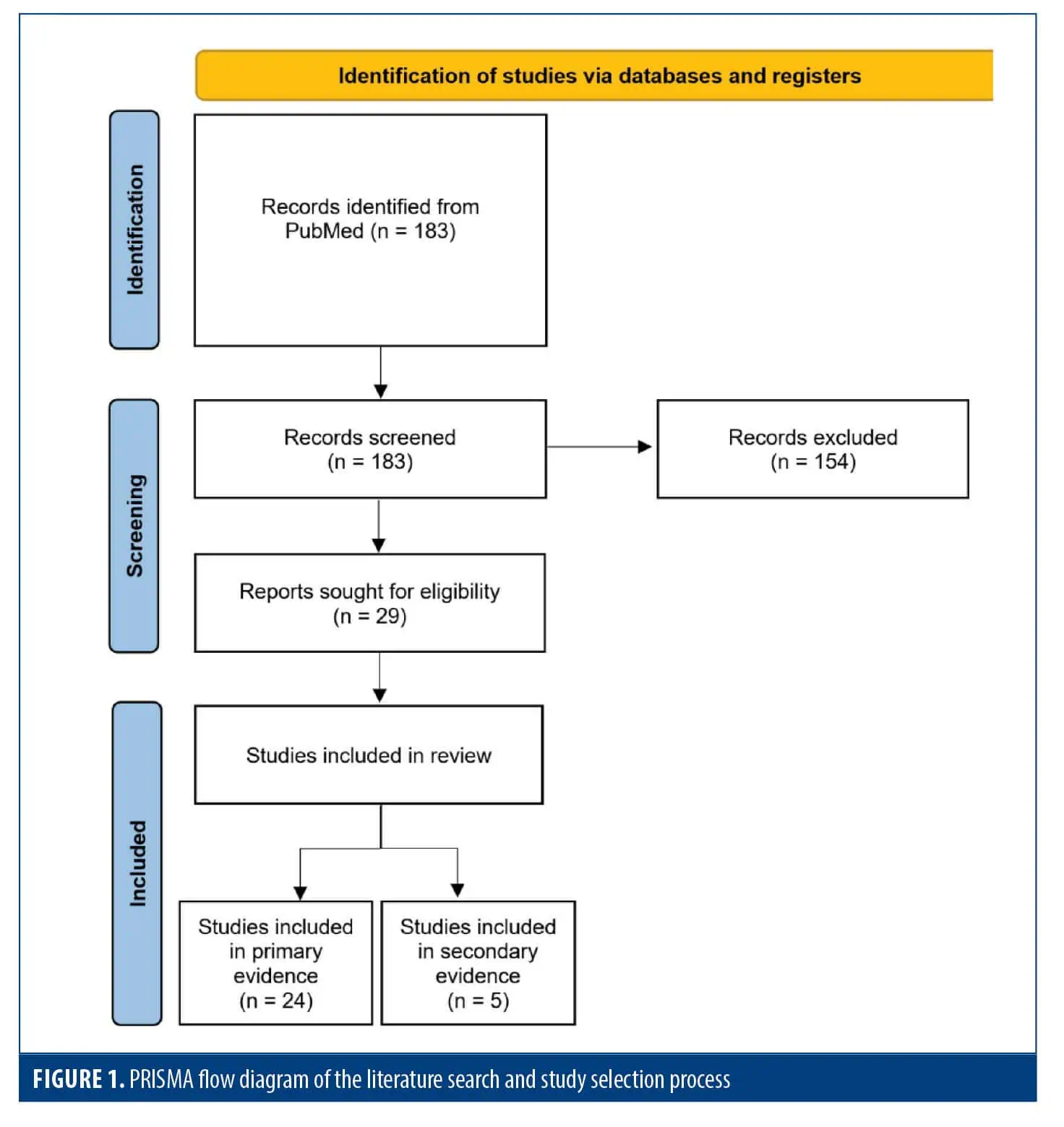
A total of 183 records were initially identified from the PubMed database. After screening titles and abstracts, 29 full-text articles were assessed for eligibility. Ultimately, 29 studies met all inclusion criteria and were selected for the final qualitative synthesis. Because direct comparative evidence was limited and studies varied widely in design, a meta-analysis was not conducted.
Articles were eligible for the primary evidence category if they 1) evaluated xanomeline/trospium in humans, 2) were published in English, and 3) reported original clinical data relevant to schizophrenia, schizoaffective disorder, or psychosis. Pooled and post hoc analyses were included when they reported distinct clinical outcomes, such as safety, cognition, negative symptoms, agitation, long-term tolerability, activity, or patient experience. Articles were excluded from the primary synthesis if they were nonhuman studies, purely mechanistic studies, editorials, commentaries, or publications that did not report original clinical outcomes. Phase 1 healthy-volunteer studies were not considered evidence of schizophrenia efficacy; however, one phase 1 study evaluating trospium mitigation of xanomeline-related cholinergic adverse effects was retained as supportive tolerability evidence.
Articles were eligible for the secondary evidence category if they directly or indirectly compared xanomeline/trospium efficacy or tolerability against placebo with other antipsychotic medications. These included systematic reviews and meta-analyses. Outcomes of interest included Positive and Negative Syndrome Scale (PANSS) score change, clinical response, discontinuation, EPS, weight gain, somnolence, metabolic effects, gastrointestinal adverse effects, anticholinergic adverse effects, and overall tolerability.
Titles and abstracts were screened for eligibility followed by full-text review. Data extracted from eligible articles included study design, population, comparison method, treatment duration, efficacy outcomes, tolerability outcomes, discontinuation, adjunctive use, population, and whether the study provided direct evidence of superiority over other antipsychotics.
The primary outcome was whether any published original clinical study demonstrated superiority of xanomeline/trospium over another first- or second-generation antipsychotic medication. Superiority was defined as a statistically significant improvement in efficacy, relapse prevention, overall tolerability, EPS, metabolic effects, discontinuation, or adjunctive effectiveness. Placebo-controlled trials were considered evidence of efficacy but not evidence of superiority over established antipsychotics. Findings were synthesized qualitatively, as no direct head-to-head randomized controlled trials were identified.
Results
A total of 183 records were identified. After screening titles and abstracts, 154 records were excluded. Twenty-nine full-text reports were assessed for eligibility, and all 29 were included in the review. These included 24 publications classified in the primary evidence synthesis and 5 publications classified in the secondary evidence synthesis. The primary evidence synthesis included original clinical evidence, including randomized trials, open-label studies, pooled and post hoc analyses, real-world and pharmacovigilance studies, qualitative studies, and case reports or case series. The secondary evidence synthesis included systematic reviews, meta-analyses, network meta-analyses, number-needed-to-treat (NNT)/number-needed-to-harm (NNH) analyses, and other indirect comparative analyses.
The primary evidence included 3 placebo-controlled randomized clinical trials of xanomeline/trospium in schizophrenia, long-term open-label studies, pooled and post hoc analyses of overlapping EMERGENT trial datasets, real-world or pharmacovigilance studies, qualitative studies, and case studies.13–36 The 3 placebo-controlled randomized trials were EMERGENT-1, EMERGENT-2, and EMERGENT-3. These trials evaluated xanomeline/trospium vs placebo in adults with schizophrenia and provide the central evidence supporting antipsychotic efficacy.13–15 Long-term evidence included EMERGENT-4, a 52-week open-label extension study of participants who completed EMERGENT-2 or EMERGENT-3, and EMERGENT-5, a separate 52-week open-label study.16.17 One phase 1 healthy-volunteer study was included as supportive tolerability evidence.18 Other publications used overlapping EMERGENT datasets to examine safety, cognition, negative symptoms, agitation, activity, and related outcomes.19–28
Indirect comparative evidence. Five studies were included in the secondary evidence, including 1 network meta-analysis, 1 NNT/NNH analysis, and 3 systematic reviews and meta-analyses.7–11 At present, clinical trial evidence for the efficacy of xanomeline/trospium comes primarily from short-term placebo-controlled trials presented to the United States Food and Drug Administration (FDA).13–15 Furthermore, indirect comparisons of xanomeline/trospium to other antipsychotic agents are limited and inconclusive. For example, an NNT/NNH analysis suggested a favorable benefit–risk profile for xanomeline/trospium vs placebo and contextualized findings against other antipsychotics, but these comparisons were indirect and limited by differences between trials, including study design, duration, patient populations, and outcome reporting.7 Additionally, a network meta-analysis compared xanomeline/trospium to aripiprazole, risperidone, and olanzapine across 33 short-term placebo-controlled randomized trials. In this study, xanomeline/trospium against placebo was not clearly more effective for short-term symptom reduction than the other antipsychotics compared to placebo.8
Study design for comparing side effects. The network analysis suggested that xanomeline/trospium may have a more favorable side-effect profile than other antipsychotics in certain areas. For example, xanomeline/trospium was associated with less weight gain than risperidone. However, its rate of all-cause discontinuation, which may partly reflect adverse effects, was higher than the rate seen with the other 3 antipsychotics studied.8 Notably, this analysis did not evaluate EPS.
Based on the EMERGENT studies, low EPS risk has been described as a distinguishing feature of xanomeline/trospium. Patients on xanomeline/trospium had EPS rates that were low and comparable to placebo.13–15,19,25 This may be explained by xanomeline/trospium’s mechanism of action because it does not directly block postsynaptic D2 receptors in the dorsal striatum, where dopamine blockade can contribute to EPS such as slowed movements, rigidity, tremor, acute dystonia, and drug-induced parkinsonism.37,38 However, low EPS risk is not unique to xanomeline/trospium. Similar statements have previously been made regarding second-generation antipsychotics such as aripiprazole, in which “findings from numerous controlled trials reported that the rate of aripiprazole-induced extrapyramidal side effects was similar to placebo.”39
Thus, xanomeline/trospium might cause less EPS than haloperidol. This is especially the case when haloperidol is used alone. However, this may not be the most clinically relevant comparison since anticholinergic medications, such as benztropine, are often added to haloperidol to prevent or treat antipsychotic-induced EPS.38 Therefore, a more appropriate comparison would be xanomeline/trospium against haloperidol and benztropine or against a second-generation antipsychotic.
Short- vs long-term efficacy. As with most new medications, xanomeline/trospium’s long-term efficacy is not yet established. Although some have suggested that xanomeline/trospium may be superior to existing antipsychotic medications with regard to side effects or efficacy, this has not been proven.1 EMERGENT-4 and EMERGENT-5 provide useful 52-week open-label safety, tolerability, and maintenance data, but neither provides randomized active-comparator evidence.16,17 This limitation is important because schizophrenia is typically a chronic illness requiring long-term treatment. Older antipsychotic medications therefore continue to have an important role, especially in maintenance therapy, as they have been studied extensively.4–6 In contrast, the current evidence for xanomeline/trospium regarding efficacy and side effects remains largely limited due to short-term use.
Adjunctive use and effectiveness. Evidence for xanomeline/trospium as an adjunctive treatment is also limited. In a retrospective study of patients with treatment-resistant schizophrenia in Texas state hospitals, xanomeline/trospium was used alongside dopamine receptor blocking antipsychotics, but 70% of patients discontinued xanomeline/trospium with another antipsychotic due to adverse effects or lack of perceived benefit.29 Because this was not a controlled study and involved a very ill population, it cannot prove that xanomeline/trospium is ineffective as an adjunctive treatment. However, it does raise questions about real-world tolerability and effectiveness.
The ARISE trial further contributes to this uncertainty. In this phase 3 adjunctive study, xanomeline/trospium added to a second-generation antipsychotic produced a numerically greater reduction in PANSS total score than placebo added to a second-generation antipsychotic. However, the difference did not reach statistical significance for the primary endpoint.40 Since combination treatment strategies are common in real-world management of schizophrenia, these findings raise questions regarding the clinical utility of xanomeline/trospium outside of controlled monotherapy trials against placebo.
While case reports addressing polyuria, constipation, adjunctive use, or clozapine-resistant schizophrenia are valuable, they are unable to establish efficacy or superiority.33,36 Similarly, qualitative studies of patient experiences may provide insight into tolerability, but they also do not establish superiority over other antipsychotics.31,32
Discussion
This review found that xanomeline/trospium has demonstrated efficacy vs placebo and has a distinct tolerability profile, including low observed rates of EPS. However, no published direct head-to-head trials were identified comparing xanomeline/trospium with other antipsychotic medications. Existing evidence includes placebo-controlled trials, open-label studies, pooled and post hoc EMERGENT analyses, observational studies, qualitative studies, and case reports. However, they come from placebo-controlled, uncontrolled, or overlapping datasets. Secondary evidence, including a network meta-analysis, suggests efficacy vs placebo and possible tolerability advantages in selected areas such as weight gain, but does not establish superiority over other antipsychotics. Overall, xanomeline/trospium is a promising and mechanistically novel medication, but current evidence does not yet support that it is superior to existing antipsychotic medications.
Other non-dopamine receptor blocking drugs: pimavanserin and VMAT2 inhibitors. Xanomeline/trospium has been viewed as “revolutionary” even though its effects have not yet been demonstrated to be superior. It seems that this perception may be based on the uniqueness of its mechanism of action—it does not block dopamine receptors in the brain. This is especially important because it does not block dopamine receptors in the dorsal striatum, where dopamine blockade is associated with EPS. However, xanomeline/trospium is not the first medication that affects dopamine neurotransmission while sparing postsynaptic dopamine receptors.
Pimavanserin, is an antipsychotic medication FDA approved for the treatment of psychosis in Parkinson’s disease. It does not block dopamine receptors and instead acts primarily through serotonin 5-HT2A inverse agonism/antagonism.41
Additionally, deutetrabenazine and other VMAT2 inhibitors are FDA approved to treat tardive dyskinesia. These medications reduce presynaptic monoamine storage and can decrease dopaminergic signaling without blocking postsynaptic dopamine receptors.42 However, VMAT2 inhibitors do not exert an antipsychotic effect in schizophrenia. Thus, decreasing dopamine in a way that does not involve blockade of postsynaptic dopamine receptors is not sufficient or necessary to achieve an antipsychotic effect.
Ventral striatum: psychosis vs pleasure. More central to understanding xanomeline/trospium’s mechanism is the hypothesis that the anatomic location involved in the pathogenesis of psychosis includes the ventral striatum, including the nucleus accumbens. However, other investigators have emphasized additional anatomic regions and circuits from which psychosis may arise.43,44
A focus on the nucleus accumbens as a site involved in psychosis may seem unexpected based on functions generally associated with this region, such as pleasure, reward, and motivation. For example, increased dopamine signaling in the nucleus accumbens has been associated with the reinforcing and pleasurable effects of cocaine use.45 Those who have sought to explain how xanomeline/trospium affects the nucleus accumbens have not fully elaborated on how dysregulated dopamine signaling in this region may contribute to both reward-related experiences and psychotic symptoms. Such explanations are not required for FDA approval, but they illustrate the complexity of the neuroscience underlying psychosis and the putative actions of xanomeline/trospium. Other theories concerning cholinergic regulation of dopamine also reference the role of the laterodorsal tegmental nucleus in modulating ventral tegmental area activity.3
Pathophysiology of schizophrenia: dopamine or acetylcholine? Traditional models of schizophrenia have centered on dopamine as a key mediator of psychosis and antipsychotic response. Xanomeline/trospium relates to basic science discoveries about cholinergic signaling, particularly the role of M1 and M4 muscarinic receptors in regulating dopamine activity in the striatum.2,3
However, it is not clear that xanomeline/trospium reveals schizophrenia to be primarily a disorder of the acetylcholine system. Some studies have found changes in muscarinic receptors in patients with schizophrenia, including changes in M1 and M4 receptor expression in areas such as the striatum, hippocampus, and cortex.46 However, these findings do not prove that a specific acetylcholine abnormality, such as a putative mutation in muscarinic receptors in the ventral striatum, is the cause of schizophrenia. The muscarinic system serves as an upstream pathway that regulates dopamine signaling. However, dopamine remains the key neurotransmitter associated with psychosis and antipsychotic response.37
Historical perspective. When considering the history of antipsychotic development, there is precedence for newly introduced medications that held great promise only for their limitations to be appreciated at a later time. For example, clozapine was heralded as superior to other medications, and it remains uniquely important and FDA approved in treatment-resistant schizophrenia.47 However, its problematic side-effect profile, including agranulocytosis, metabolic effects, myocarditis, and seizures, has been a limitation in its use.48 This illustrates that, as is true in many parts of pharmacology, new medications are seen in more nuanced ways over time.
More generally, second-generation antipsychotic medications were greeted with much fanfare. However, the Clinical Antipsychotic Trials of Intervention Effectiveness (CATIE) study found second-generation antipsychotic medications and first-generation medications shared comparable efficacy.49 In addition, the second-generation medication that seemed to have the best efficacy, olanzapine, was associated with greater risk of metabolic syndrome.49 Its use, along with the excitement it had attracted, diminished. A similar phenomenon could occur with xanomeline/trospium, but its extraordinary reception may set it up for possible disappointment when future studies show its limitations.
Limitations. This review is limited by the use of PubMed only and the inclusion of only English language studies. The included studies also varied in design, comparison approach, duration, and outcome reporting, and several publications analyzed overlapping EMERGENT datasets. Therefore, the number of publications should not be interpreted as the number of independent patient cohorts.
Future studies should directly compare xanomeline/trospium with clinically relevant antipsychotic regimens, including second-generation antipsychotics and first-generation antipsychotics used with standard EPS management when appropriate. Longer term and adjunctive studies are needed to evaluate effectiveness, metabolic outcomes, EPS, and tolerability, while clarifying which patients may benefit most from xanomeline/trospium.
Is xanomeline/trospium revolutionary? The basic science that provides an understanding of xanomeline/trospium’s mechanism of action is extraordinary. But is it revolutionary? Chlorpromazine was revolutionary. Before its discovery, there were no medications proven to treat schizophrenia. Its impact was immense and transformed psychiatric treatment.50 It allowed for the first specific biological theory of the pathophysiology of schizophrenia. The dopamine theory suddenly, and remarkably, emerged.
In contrast, xanomeline/trospium is an important addition to the pharmacological armamentarium in treating psychosis. It ultimately works through its downstream effects on the dopamine system. It represents a first in exerting its effects through the indirect cholinergic regulation of dopamine, but the phenomena of psychosis, and its treatment, may still center on dopamine.
Scientific investigation in psychopharmacology has entered a new, highly sophisticated era. Xanomeline/trospium is a remarkable medication that promises many advantages, even if some questions about it remain. It has been referred to as representing a paradigm shift.51 In the future, radically unprecedented scientific findings explaining psychosis may give rise to a new medication that is fundamentally unique and curative—and that will be revolutionary.
References
- Dolgin E. Revolutionary drug for schizophrenia wins US approval. Nature. 2024;634:276–277.
- Paul SM, Yohn SE, Popiolek M, et al. Muscarinic acetylcholine receptor agonists as novel treatments for schizophrenia. Am J Psychiatry. 2022;179(9):611–627.
- Nunes EJ, Addy NA, Conn PJ, et al. Targeting the actions of muscarinic receptors on dopamine systems: new strategies for treating neuropsychiatric disorders. Annu Rev Pharmacol Toxicol. 2024;64:277–289.
- Schneider-Thoma J, Chalkou K, Dörries C, et al. Comparative efficacy and tolerability of 32 oral and long-acting injectable antipsychotics for the maintenance treatment of adults with schizophrenia: a systematic review and network meta-analysis. Lancet. 2022;399(10327):824–836.
- Ostuzzi G, Bertolini F, Tedeschi F, et al. Oral and long-acting antipsychotics for relapse prevention in schizophrenia-spectrum disorders: a network meta-analysis of 92 randomized trials including 22,645 participants. World Psychiatry. 2022;21(2):295–307.
- Leucht S, Schneider-Thoma J, Burschinski A, et al. Long-term efficacy of antipsychotic drugs in initially acutely ill adults with schizophrenia: systematic review and network meta-analysis. World Psychiatry. 2023;22(2):315–324.
- Citrome L, Neugebauer NM, Meli AA, et al. Xanomeline and trospium chloride versus placebo for the treatment of schizophrenia: a post hoc analysis of number needed to treat, number needed to harm, and likelihood to be helped or harmed. Neuropsychiatr Dis Treat. 2025;21:761–773.
- Wright AC, McKenna A, Tice JA, et al. A network meta-analysis of KarXT and commonly used pharmacological interventions for schizophrenia. Schizophr Res. 2024;274:212–219.
- Mohammed HE, Gomaa MA, Khalifa YM, et al. Does KarXT (xanomeline-trospium) represent a novel approach to schizophrenia management? A GRADE-assessed systematic review and meta-analysis of randomized controlled clinical trials. BMC Psychiatry. 2025;25:309.
- Fabiano N, Wong S, Zhou C, et al. Efficacy, tolerability, and safety of xanomeline-trospium chloride for schizophrenia: a systematic review and meta-analysis. Eur Neuropsychopharmacol. 2025;92:62–73.
- Kishi T, Citrome L, Sakuma K, et al. Xanomeline-trospium for adults with schizophrenia experiencing acute psychosis: a systematic review and meta-analysis of safety and tolerability outcomes. Pharmacopsychiatry. 2025;58(6):249–254.
- Page MJ, McKenzie JE, Bossuyt PM, et al. The PRISMA 2020 statement: an updated guideline for reporting systematic reviews. BMJ. 2021;372:n71.
- Brannan SK, Sawchak S, Miller AC, et al. Muscarinic cholinergic receptor agonist and peripheral antagonist for schizophrenia. N Engl J Med. 2021;384(8):717–726.
- Kaul I, Sawchak S, Correll CU, et al. Efficacy and safety of the muscarinic receptor agonist KarXT (xanomeline-trospium) in schizophrenia (EMERGENT-2) in the USA: results from a randomised, double-blind, placebo-controlled, flexible-dose phase 3 trial. Lancet. 2024;403(10422):160–170.
- Kaul I, Sawchak S, Walling DP, et al. Efficacy and safety of xanomeline-trospium chloride in schizophrenia: a randomized clinical trial. JAMA Psychiatry. 2024;81(8):749–756.
- Kaul I, Claxton A, Sauder C, et al. Long-term safety and efficacy of xanomeline and trospium chloride in schizophrenia: a 52-week open-label extension trial. Am J Psychiatry. 2026;183:183–192.
- Kaul I, Claxton A, Sauder C, et al. Long-term efficacy, safety, and tolerability of xanomeline and trospium chloride in schizophrenia: a 52-week, open-label trial (EMERGENT-5). Schizophr Res. 2026;288:86–94.
- Breier A, Brannan SK, Paul SM, et al. Evidence of trospium’s ability to mitigate cholinergic adverse events related to xanomeline: phase 1 study results. Psychopharmacology (Berl). 2023;240:1191–1198.
- Correll CU, Angelov AS, Miller AC, et al. Safety and tolerability of KarXT (xanomeline-trospium) in a phase 2, randomized, double-blind, placebo-controlled study in patients with schizophrenia. Schizophrenia (Heidelb). 2022;8:109.
- Sauder C, Allen LA, Baker E, et al. Effectiveness of KarXT (xanomeline-trospium) for cognitive impairment in schizophrenia: post hoc analyses from a randomised, double-blind, placebo-controlled phase 2 study. Transl Psychiatry. 2022;12:491.
- Weiden PJ, Breier A, Kavanagh S, et al. Antipsychotic efficacy of KarXT (xanomeline-trospium): post hoc analysis of Positive and Negative Syndrome Scale categorical response rates, time course of response, and symptom domains of response in a phase 2 study. J Clin Psychiatry. 2022;83(3):21m14316.
- Kott A, Brannan S, Wang X, et al. The impact of baseline anxiety on drug-placebo separation and drug/placebo response in an acute schizophrenia clinical trial: a post hoc analysis. Schizophr Bull Open. 2023;4(1):sgad003.
- Horan WP, Claxton A, Zhu H, et al. Efficacy of KarXT on negative symptoms in acute schizophrenia: a post hoc analysis of pooled data from 3 trials. Schizophr Res. 2024;274:57–65.
- Horan WP, Sauder C, Harvey PD, et al. The impact of xanomeline and trospium chloride on cognitive impairment in acute schizophrenia: replication in pooled data from two phase 3 trials. Am J Psychiatry. 2025;182:297–306.
- Kaul I, Claxton A, Sawchak S, et al. Safety and tolerability of xanomeline and trospium chloride in schizophrenia: pooled results from the 5-week, randomized, double-blind, placebo-controlled EMERGENT trials. J Clin Psychiatry. 2025;86:24m15497.
- Yeung PP, Zhu H, Breier A, et al. Xanomeline and trospium chloride for the treatment of agitation associated with schizophrenia: PANSS-Excited Component results from 3 randomized, double-blind, placebo-controlled EMERGENT trials. J Clin Psychiatry. 2025;86:24m15668.
- Harvey PD, Chaturvedi SA, Horan WP, et al. Using digital phenotyping to index 12-month treatment effects of xanomeline and trospium chloride on physical activity in outpatients with schizophrenia: results from a 52-week open-label clinical trial. Neurosci Appl. 2026;5:106839.
- Targum SD, Murphy C, Breier A, et al. Site-independent confirmation of primary site-based PANSS ratings in a schizophrenia trial. J Psychiatr Res. 2021;144:241–246.
- Vadiei N, Crismon ML. Real-world effectiveness and safety of xanomeline and trospium for treatment-resistant schizophrenia in a state hospital system. Front Psychiatry. 2026;17:1736922.
- Song X, Feng T, Lin H, et al. A real-world pharmacovigilance study of xanomeline-trospium events in the FDA Adverse Event Reporting System (FAERS). Psychiatry Res. 2026;361:117162.
- Horan WP, Saucier C, Weiden PJ, et al. A qualitative investigation of the experience of taking xanomeline and trospium chloride for schizophrenia, part 1: perceived impact on symptoms. Schizophr Bull Open. 2026;7:sgag002.
- Weiden PJ, Saucier C, Foster AM, et al. A qualitative investigation of the experience of taking xanomeline and trospium chloride for schizophrenia, part 2: perceived changes in subjective quality of life and medication satisfaction. Schizophr Bull Open. 2026;7(1):sgag003.
- Price MZ, Price RL. Early outpatient clinical experience with xanomeline and trospium chloride for schizophrenia: a case report. Front Psychiatry. 2025;16:1630574.
- Leach H, DiGuglielmo F. Xanomeline/trospium-induced polyuria: a patient case report. Ment Health Clin. 2025;15:255–257.
- Dang VM, Powers JM, Markota M, et al. Adjunctive xanomeline/trospium in clozapine-resistant schizophrenia: two case reports demonstrating limited response. Ther Adv Psychopharmacol. 2026;16:20451253261433832.
- Ezema EC, Meftah A, Aribisala B, et al. A case of constipation during Cobenfy therapy and a constipation prevention protocol. Cureus. 2026;18:e105113.
- Howes OD, Kapur S. The dopamine hypothesis of schizophrenia: version III-the final common pathway. Schizophr Bull. 2009;35(3):549–562.
- Ahuja A, Patel P, Abdijadid S. Benztropine. StatPearls Publishing. Updated 29 Jan 2024. Accessed 8 Jun 2026. https://www.ncbi.nlm.nih.gov/books/NBK560633/
- Kumar S, Pandey RS, Thirthalli J, et al. A comparative study of short term efficacy of aripiprazole and risperidone in schizophrenia. Curr Neuropharmacol. 2017;15(8):1073–1084.
- Bristol Myers Squibb announces topline results from Phase 3 ARISE trial evaluating Cobenfy (xanomeline and trospium chloride) as an adjunctive treatment to atypical antipsychotics in adults with schizophrenia. Bristol Myers Squibb. 22 Apr 2025. Accessed 8 Jun 2026. https://news.bms.com/news/details/2025/Bristol-Myers-Squibb-Announces-Topline-Results-from-Phase-3-ARISE-Trial-Evaluating-Cobenfy-xanomeline-and-trospium-chloride-as-an-Adjunctive-Treatment-to-Atypical-Antipsychotics-in-Adults-with-Schizophrenia/default.aspx
- Heim B, Peball M, Krismer F, et al. Pimavanserin: a truly effective treatment for Parkinson’s disease psychosis? A review of interventions. Neuropsychiatr Dis Treat. 2023;19:1303–1312.
- Connolly A, Wallman P, Dzahini O, et al. Meta-analysis and systematic review of vesicular monoamine transporter (VMAT-2) inhibitors in schizophrenia and psychosis. Psychopharmacology (Berl). 2024;241(2):225–241.
- Guo J, Rothman DL, Small SA. Why hippocampal glutamate levels are elevated in schizophrenia. JAMA Psychiatry. 2023;80(3):274–275.
- Yun S, Yang B, Anair JD, et al. Antipsychotic drug efficacy correlates with the modulation of D1 rather than D2 receptor-expressing striatal projection neurons. Nat Neurosci. 2023;26(8):1417–1428.
- Di Chiara G, Bassareo V, Fenu S, et al. Dopamine and drug addiction: the nucleus accumbens shell connection. Neuropharmacology. 2004;47(Suppl 1):227–241.
- Saint-Georges Z, MacDonald J, Al-Khalili R, et al. Cholinergic system in schizophrenia: a systematic review and meta-analysis. Mol Psychiatry. 2025;30(7):3301–3315.
- Kane J, Honigfeld G, Singer J, et al. Clozapine for the treatment-resistant schizophrenic. A double-blind comparison with chlorpromazine. Arch Gen Psychiatry. 1988;45(9):789–796.
- Alvir JM, Lieberman JA, Safferman AZ, et al. Clozapine-induced agranulocytosis. Incidence and risk factors in the United States. N Engl J Med. 1993;329(3):162–167.
- Lieberman JA, Stroup TS, McEvoy JP, et al; Clinical Antipsychotic Trials of Intervention Effectiveness (CATIE) Investigators. Effectiveness of antipsychotic drugs in patients with chronic schizophrenia. N Engl J Med. 2005;353(12):1209–1223.
- Ban TA. Fifty years chlorpromazine: a historical perspective. Neuropsychiatr Dis Treat. 2007;3(4):495–500.
- Melnick I, Crown EC, Zinzuvadia M, et al. Real-world implementation of xanomeline-trospium in schizophrenia: a consensus panel report. J Clin Psychiatry. 2025;86:hxtachi2509.