
Innov Clin Neurosci. 2026;23(7–9):34–42.
Manish Tyagi, MD; Ajay Kumar, MD; Sanjeev Kumar Jain, MD; Sonika Sharma, PhD; and Shehzeen Afag, PhD
All authors are with Teerthanker Mahaveer University, Moradabad, India.
FUNDING: No funding was provided for this article.
DISCLOSURES: The authors have no relevant conflicts of interest.
Abstract: BACKGROUND: Schizophrenia and bipolar disorder (BD) are chronic psychiatric conditions that place considerable psychological and relational burdens on caregivers, particularly spouses. However, comparative insights into their impact in non-Western sociocultural settings remain limited.OBJECTIVE: To compare perceived stress, marital adjustment, and quality of marital life among spouses of patients with schizophrenia and BD, and to explore the influence of perceived stress and sociodemographic variables on marital outcomes. METHODS: A cross-sectional study was conducted in a tertiary care psychiatry outpatient department in India. A total of 100 spouses—50 of patients with schizophrenia (Group 1) and 50 of patients with BD (Group 2)—were assessed using the Perceived Stress Scale (PSS), Quality Marriage Index (QMI), and Short Marital Adjustment Test (SMAT). Sociodemographic data were also analyzed. RESULTS: Spouses of patients with BD reported significantly higher perceived stress and poorer marital outcomes compared to those of patients with schizophrenia. Across both groups, perceived stress was strongly and negatively correlated with marital adjustment and marital quality. Older age and longer marital duration were associated with lower stress and better marital functioning. CONCLUSION: Both schizophrenia and BD are associated with substantial caregiver burden, with greater impact observed among spouses of patients with BD. Integrating targeted stress management and culturally sensitive support into caregiver interventions is essential to enhance marital wellbeing and reduce psychological strain. Keywords: Bipolar disorder, schizophrenia, caregivers, marital status, stress, psychological, quality of life
Introduction
Marriage is defined as a commitment where a person must meet a variety of social and emotional obligations.1 Marriage also serves as a socially acceptable manner of satisfying the basic human urge for sexual fulfillment, as well as a foundation for procreation and family formation.1
In the context of a shifting social fabric in which people are migrating from joint families to nuclear families,2,3 spouses often become the primary caregivers for patients with psychiatric diseases such as schizophrenia and bipolar disorder (BD).4 These disorders often impose complex caregiving demands, contributing to heightened levels of perceived stress, marital discord, and diminished quality of marital life.5
Schizophrenia, a chronic and debilitating condition, places long-term caregiving burdens on spouses. The condition manifests with profound disorder in thought, language, and personality along with characteristic symptoms of psychosis, such as hearing voices or delusions.6 Studies have consistently shown that caregivers of individuals with schizophrenia report higher levels of stress and poorer quality of life due to the persistent nature of caregiving and stigma associated with the disorder.7 In contrast, BD, characterized by alternating manic and depressive episodes, introduces episodic disruptions to family dynamics, which can be equally challenging but are qualitatively different.8 Despite substantial evidence of caregiving stress in both conditions, direct comparisons between their effects on marital quality and adjustment remain underexplored.
Existing research primarily addresses stress and quality of life in caregivers of individual mental illnesses, often in isolation. While studies have examined marital adjustment in schizophrenia9 and BD,10 a comparative analysis of the 2 disorders, particularly in the context of marital quality, adjustment, and stress, is lacking. Furthermore, little literature is available on this subject from countries like India that have a different sociocultural background compared to Western nations.
This study, therefore, aims to address these gaps with specific objectives to assess and compare the perceived stress, marital adjustment, and quality of marital life among spouses of individuals with schizophrenia or BD, to compare the relationship between perceived stress and marital adjustment/quality of life, and to evaluate the effect of sociodemographic factors on perceived stress, quality of life, and marital adjustment. Such insights are critical for informing the development of targeted interventions to improve marital quality, alleviate caregiver burden, and ultimately enhance outcomes for both caregivers and patients.
Methods
Study design and site. The study employed a cross-sectional design and was conducted at psychiatry outpatient department (OPD) of Teerthankar Mahaveer Medical College and Research Center (TMMC & RC), Moradabad, India. Ref. No.: IRB/124/2024. Data collection took place on July 5, 2024.
Ethics declaration. Written informed consent was obtained from the study participants and the patient data were kept in strictest confidentiality. Ethical considerations and nonintervention with proposed treatment was maintained, even if patients refused to participate in study.
Inclusion criteria. The inclusion criteria were as follows: spouses of patients with schizophrenia or BD who were more than 18 years of age, spouses staying continuously with the patient since marriage, and spouses who were willing to give written informed consent.
Exclusion criteria. Spouses with any diagnosed physical illness, psychiatric illness, and/or substance use disorder; spouses who were not the primary caregivers of the patients; and spouses of patients who were unstable (patients who had any exacerbations, relapses, or >50% hike in drug dose over the previous 3 months) were excluded.
Sample size. All patients attending the Psychiatry OPD until July 4, 2024 who met the inclusion criteria were considered for the study. A total of 100 participants were included in the study, and participants were divided into Group 1 (spouses of patients with schizophrenia) and Group 2 (spouses of patients with BD; both n=50), representing the spouses of patients with schizophrenia and spouses of patients with BD, respectively.
Study instruments. Pro forma. Pro forma consisted of a structured format to record certain variables regarding the patient, such as age, marital status, sex, occupation, education, religion, family status, locality, relationship with the patient, history of medical and surgical illness, family history, past history, and previous treatment history. Additionally, the pro forma included structured questionnaires such as Perceived Stress Scale (PSS),11 Marital Adjustment Test (MAT),12 and Quality Marriage Index (QMI)13 to meet the study objectives.
Perceived Stress Scale. The PSS is a validated tool widely used to assess perceived stress.11 It includes 10 items that measure how unpredictable, uncontrollable, or overloaded individuals perceive their lives to be, with responses rated on a 5-point Likert scale. Scores range from 0 to 40, with lower scores indicating lower perceived stress and higher scores indicating greater perceived stress. Specifically, scores between 0 and 13 reflect low stress, scores between 14 and 26 indicate moderate stress, and scores between 27 and 40 suggest high perceived stress.
Quality Marriage Index. This is a 6-item marital contentment scale.13 The first 5 items are rated on a 7-point scale ranging from 1 (strongly disagree) to 7 (strongly agree). The last item is graded as 1 (extremely low) to 10 (extremely high). The QMI scores range from 6 to 45, with higher scores indicating stronger overall contentment with the partnership.
Marital Adjustment Test. The MAT (also known as the Locke-Wallace Marital Adjustment or Short Marital Adjustment Test) Test is a short (15-item) self-report measure of marital satisfaction and areas of disagreement.12 The first item of the test measures global happiness; the next 8 items address agreement on specific matters, such as finances, recreation, affection, friends, and philosophy of life; and the remaining 6 items address specific choices and feelings regarding the marriage and the respondent’s spouse. Scores on the Locke-Wallace range from 2 to 158, with a cutoff score of 100. Scores less than 100 indicate marital dissatisfaction or maladjustment.
Patient recruitment. Patients were recruited from the Psychiatry OPD of TMMC & RC, Moradabad. The International Classification of Diseases, 11th Revision (ICD-11) was used to diagnose patients with BD and schizophrenia, and subsequently spouses were assessed for the study inclusion criteria subject to written informed consent. Semistructured pro forma was applied to record the baseline sociodemographic data, perceived stress (PSS), marital adjustment (MAT), and quality of marital life (QMI) of spouses. The data was then evaluated and computed for statistical analysis.
Statistical analysis. The data were analyzed using Statistical Package for Social Sciences (SPSS; IBM Corp., Version 23.0). The categorical variables were represented as the frequency and percentage, while the continuous variables were summarized as mean and standard deviation (SD). Hypothesis tests were applied based on the distributions of the data with parametric tests (Pearson’s correlation, independent samples t-test, one-way ANOVA) used for normal distribution data and nonparametric tests (Mann–Whitney Test, Spearman correlation, Kruskal–Wallis test) for non-normal distributions. The distributions were evaluated through the Kolmogorov or Shapiro–Wilk test. Pearson’s χ2 test or Fisher’s exact test was applied where there were categorical variables and no assumption of normality. For certain variables (education, occupation) the categories were merged to increase sample size and statistical power for hypothesis testing. A P value of ≤0.05 was considered statistically significant.
Results
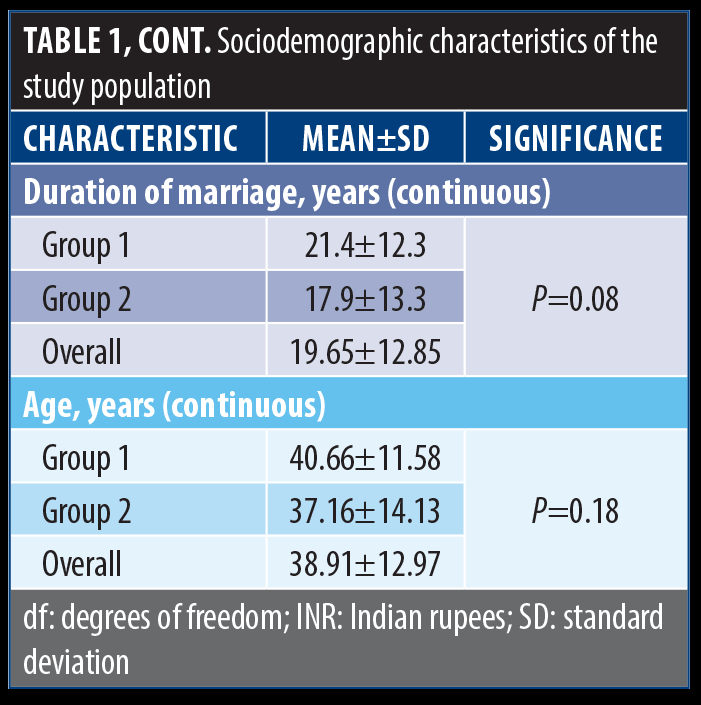
Sociodemographic characteristics. Table 1 summarizes the sociodemographic characteristics of the study participants. The study comprised spouses of patients with BD or schizophrenia, categorized into 2 groups. The participants’ ages spanned 4 groups (≤30 years, 31–40 years, 41–50 years, >50 years), with the largest proportion aged 31 to 40 years (29%), followed by those aged 41 to 50 years (26%). Participants younger than 30 years constituted 25%, while those older than 50 years accounted for 20%. The mean age across the sample was 38.91 years (SD: 12.97). Group 1 participants were slightly older on average (40.66±11.58 years) compared to Group 2 (37.16±14.13 years). Sex distribution revealed a nearly balanced representation, with male participants comprising 51% and female participants comprising 49% of the total sample.
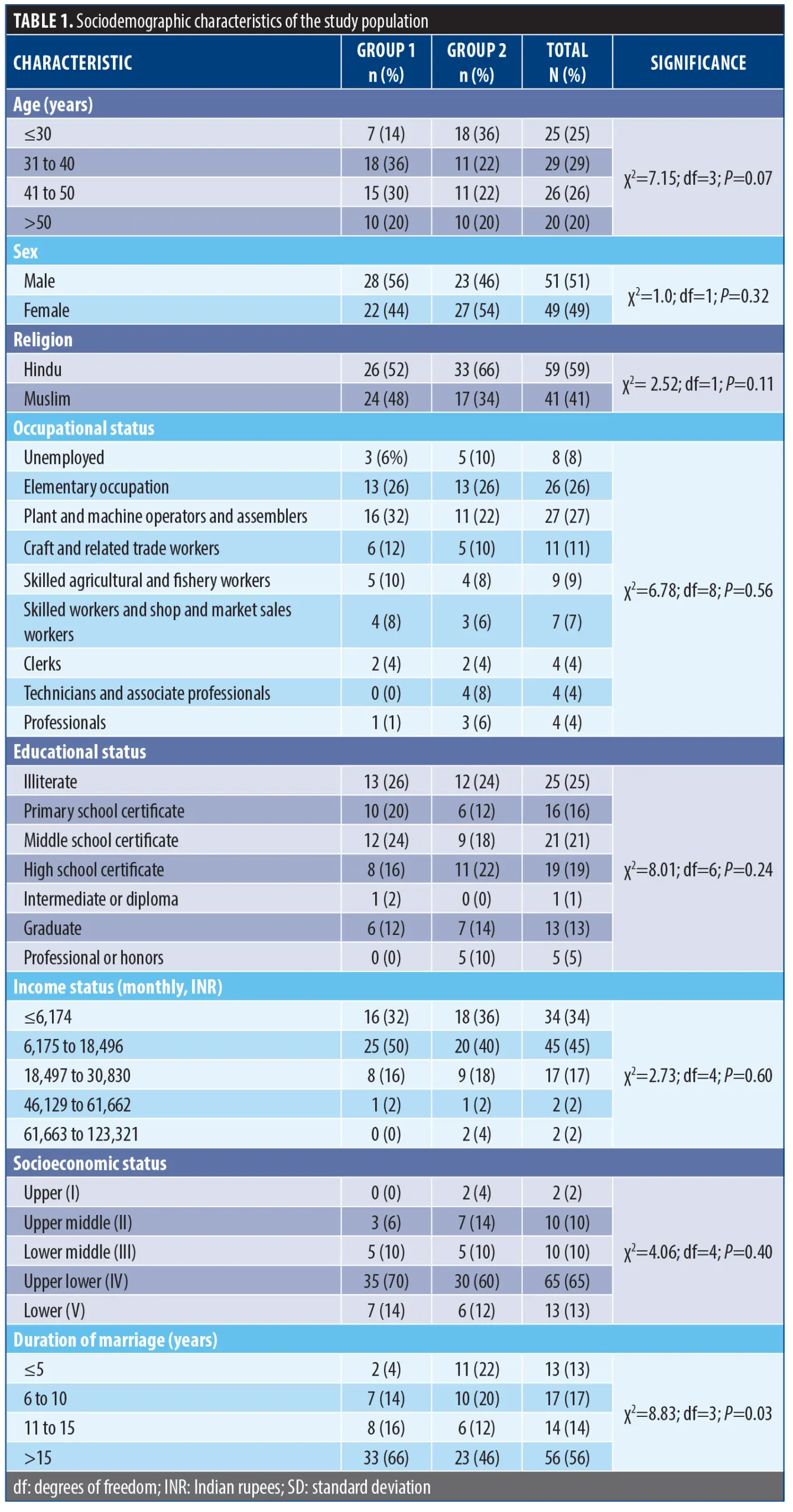
Most participants identified as Hindu (59%), while Muslims made up the remaining 41%. Occupational roles varied widely, with the majority employed in elementary occupations (26%) or as plant and machine operators (27%). Smaller proportions worked in skilled trades, clerical roles, or professional fields. Educational attainment levels showed that 25% of participants were illiterate, 21% had middle school certifications, and only 5% held professional or honors-level qualifications. Monthly income predominantly fell within the 6,175 to 18,496 Indian rupee (INR) range (45%), with just 2% earning more than 61,663 INR. Socioeconomic status reflected a concentration in the upper-lower class (65%), while a small percentage (2%) belonged to the upper class.
Duration of marriage emerged as an important variable, with 56% of participants married for over 15 years and a mean marital duration of 19.65 years (SD: 12.85). Notably, Group 1 participants reported longer marital durations (21.4±12.3 years) compared to Group 2 (17.9±13.3 years).
PSS, QMI, and MAT scores in spouses of patients with BD or schizophrenia. Table 2 and Figure 1 summarize the PSS, QMI, and MAT scores of study participants. The majority of the subjects showed moderate perceived stress (57%), followed by 26% with high perceived stress (Figure 1A). These differences in stress intensity were significant (P=0.01), as outlined in Figure 1A. The mean (SD) stress level of the participants was 21.45 (8.03); however, there were significant differences (P<0.01) between Group 1 and Group 2. The mean (SD) perceived stress of spouses in Group 2 (24.50 [7.45]) was higher than that of Group 1 spouses (18.40 [7.48]; Table 2).
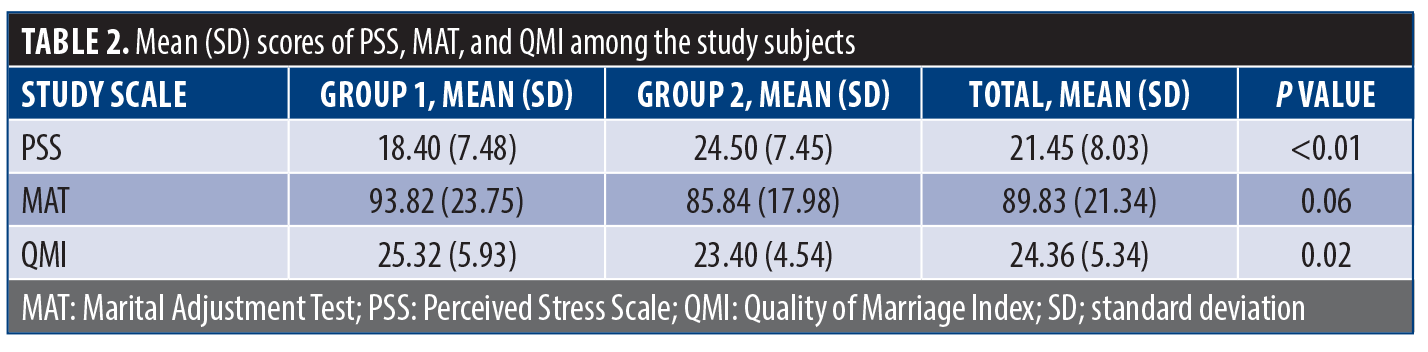
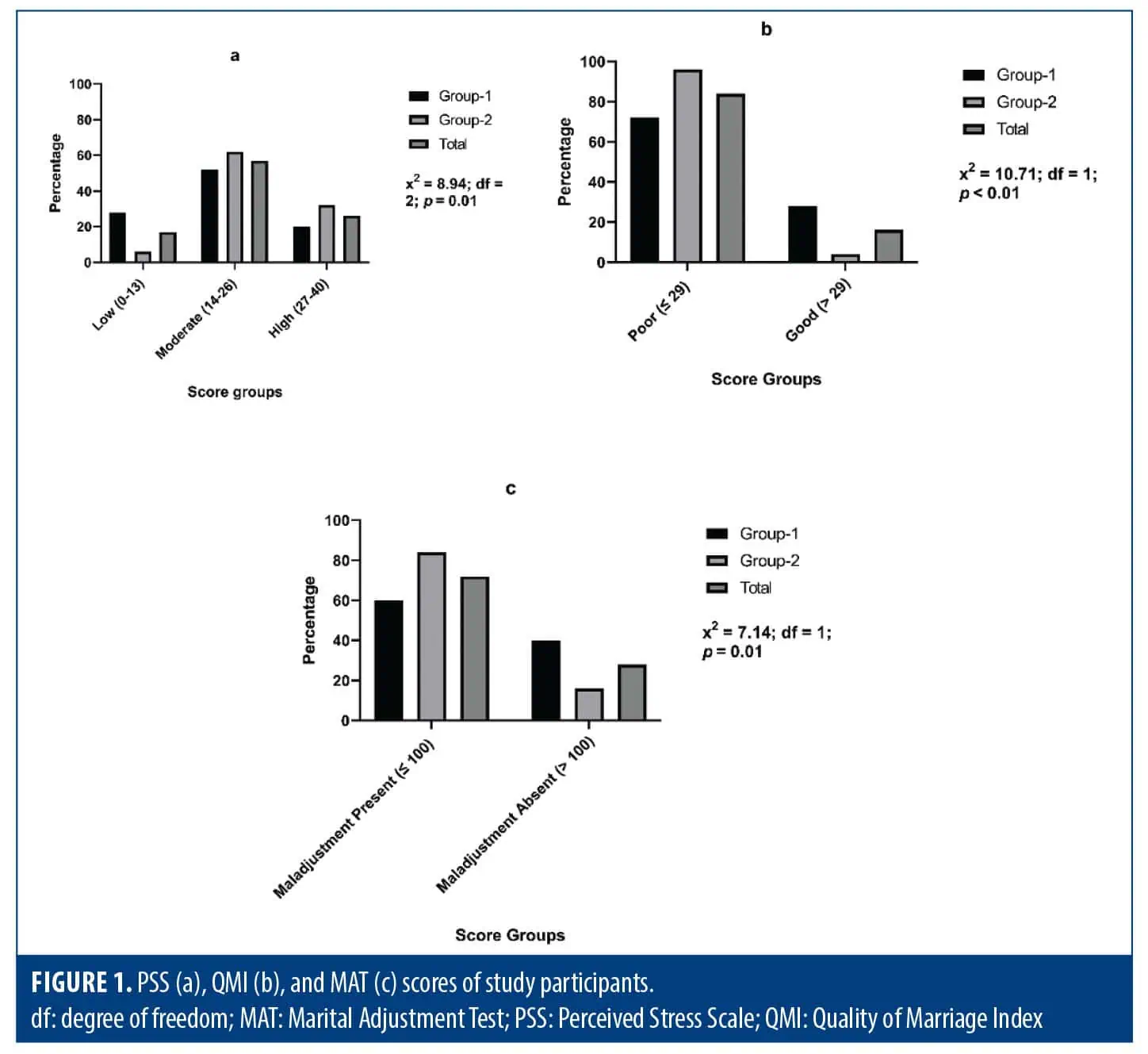
As for marriage quality, the mean (SD) QMI score of participants was 24.36 (5.34). The majority of spouses (84%) had poor quality of marriage (P<0.01; Figure 1B). Moreover, there were significant differences in QMI scores between Group 1 and Group 2 participants (P=0.02; Table 1). Consistent with the perceived stress trends, participants in Group 2 had a slightly poorer mean (SD) QMI scores (23.40 [4.54]) compared to Group 1 (25.32 [5.93]).
Similar trends were observed in marital adjustment assessment, with 72% of the participants presenting with a significant maladjustment of marital life (P=0.01; Figure 1C). The mean (SD) MAT score of the participants was 89.83 (21.34), with spouses in Group 2 showing more maladjustment than Group 1 (Table 2). However, the significance of this relationship was uncertain (P=0.06).
Correlation between PSS, MAT, and QMI. Figure 2 outlines the correlation between PSS, MAT, and QMI scores of study participants. The correlation analysis revealed significant negative associations between PSS scores and both MAT and QMI scores across all groups. For the total sample, PSS scores exhibited a strong negative correlation with MAT scores (r=–0.50; P<0.01) and QMI scores (r=–0.50; P<0.01).
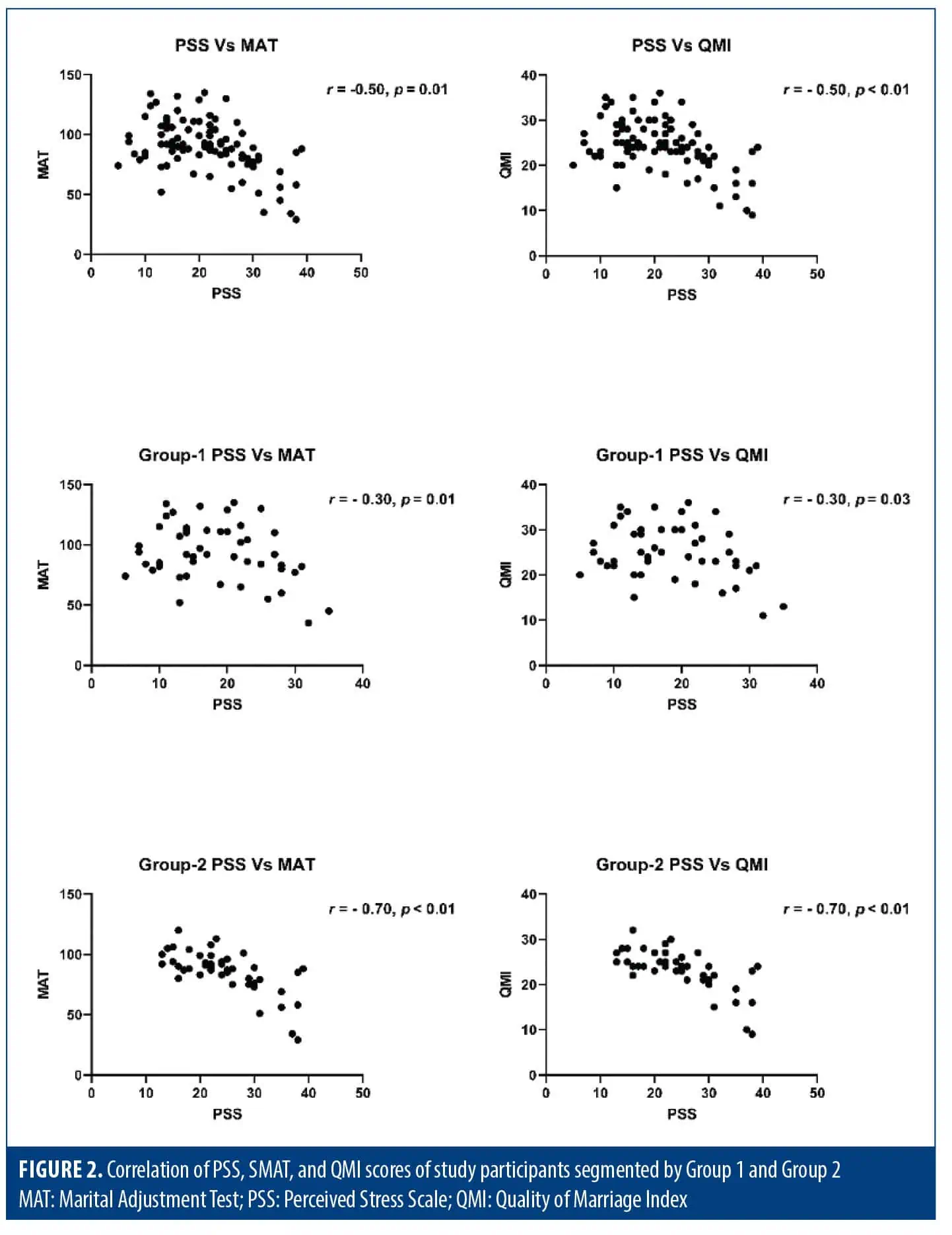
When analyzing the groups separately, differences in correlation strengths were observed. In Group 1, comprising spouses of patients with schizophrenia, PSS scores showed a moderate negative correlation with MAT scores (r=–0.31; P=0.01) and QMI scores (r=–0.30; P=0.01). In contrast, Group 2, comprising spouses of patients with BD, demonstrated a much stronger negative correlation between PSS scores and both MAT (r=–0.70; P<0.01) and QMI scores (r=–0.70; P<0.01).
Relationship between sociodemographic characteristics and PSS, MAT, and QMI. Table 3 shows the overall relationship between the sociodemographic characteristics of all study participants and PSS, MAT, and QMI scores. Age and duration of marriage showed significant relationships with all 3 scores (P<0.01). Age correlated negatively with PSS scores (r=–0.39), indicating that older participants experienced lower levels of perceived stress. Conversely, age correlated positively with both MAT (r=0.38) and QMI scores (r=0.38), suggesting that older spouses reported better marital adjustment and higher quality of marital life.
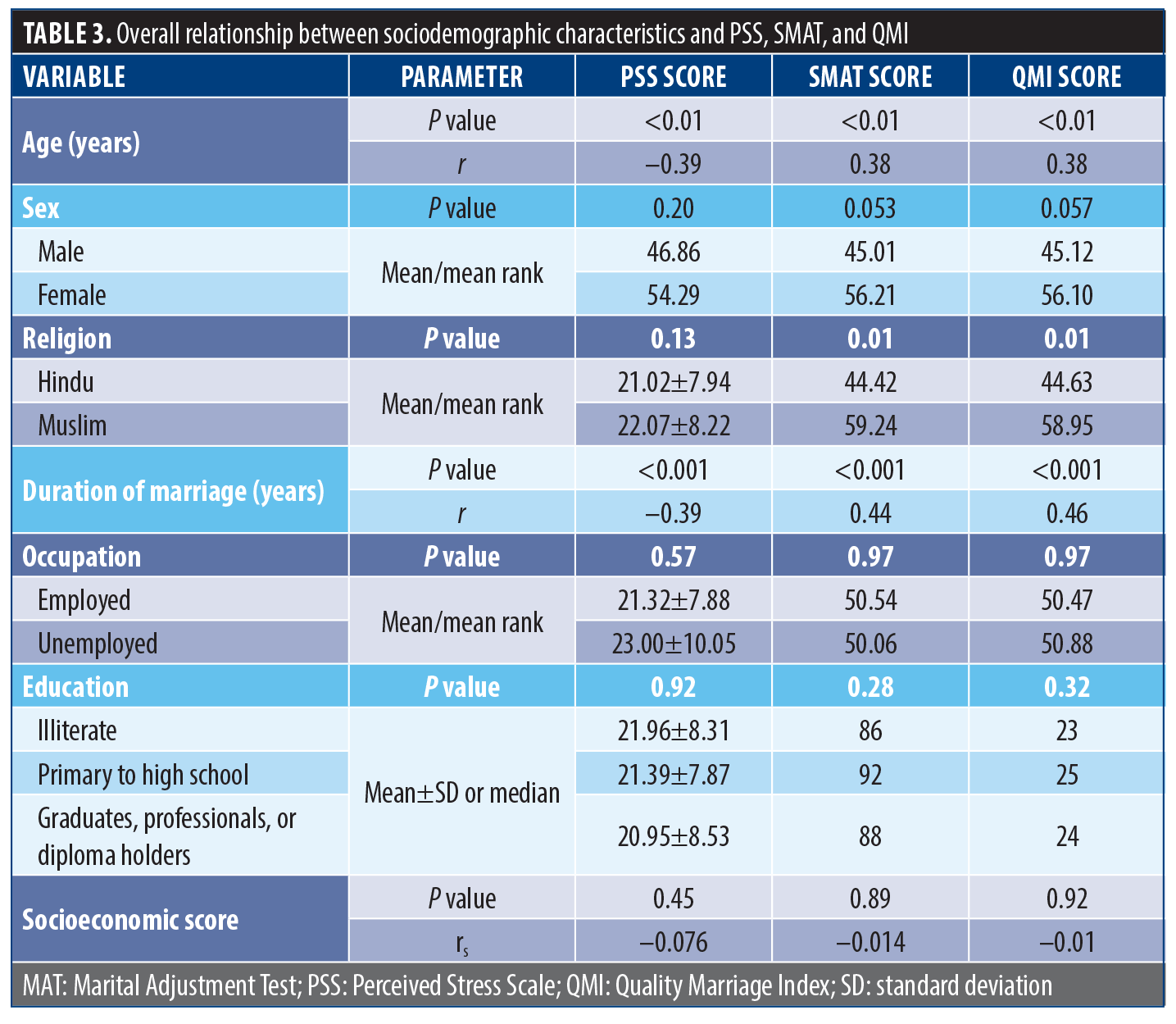
Duration of marriage demonstrated a stronger correlation with all 3 measures. It was negatively associated with PSS score (r=–0.39; P<0.001), while its positive correlations with MAT (r=0.44; P<0.001) and QMI scores (r=0.46; P<0.001) highlighted that longer marital durations were linked to reduced stress and enhanced marital outcomes. Sex differences approached significance for MAT (P=0.053) and QMI (P=0.057) scores, with female participants showing higher mean ranks compared to male participants.
Religion emerged as significant factor for MAT and QMI scores (P=0.01), with Muslim participants reporting higher mean ranks than Hindu participants. Other variables, such as occupation, education, and socioeconomic status, were not significantly associated with PSS, MAT, or QMI scores.
The analysis of sociodemographic characteristics in Group 1 revealed varying degrees of association with PSS, MAT, and QMI scores (Table 4). Age showed a weak negative correlation with PSS scores (rs=–0.24; P=0.09), though the relationship was not statistically significant. Similarly, age correlations with MAT (rs=0.129; P=0.37) and QMI scores (rs=0.12; P=0.41) were weak and nonsignificant.
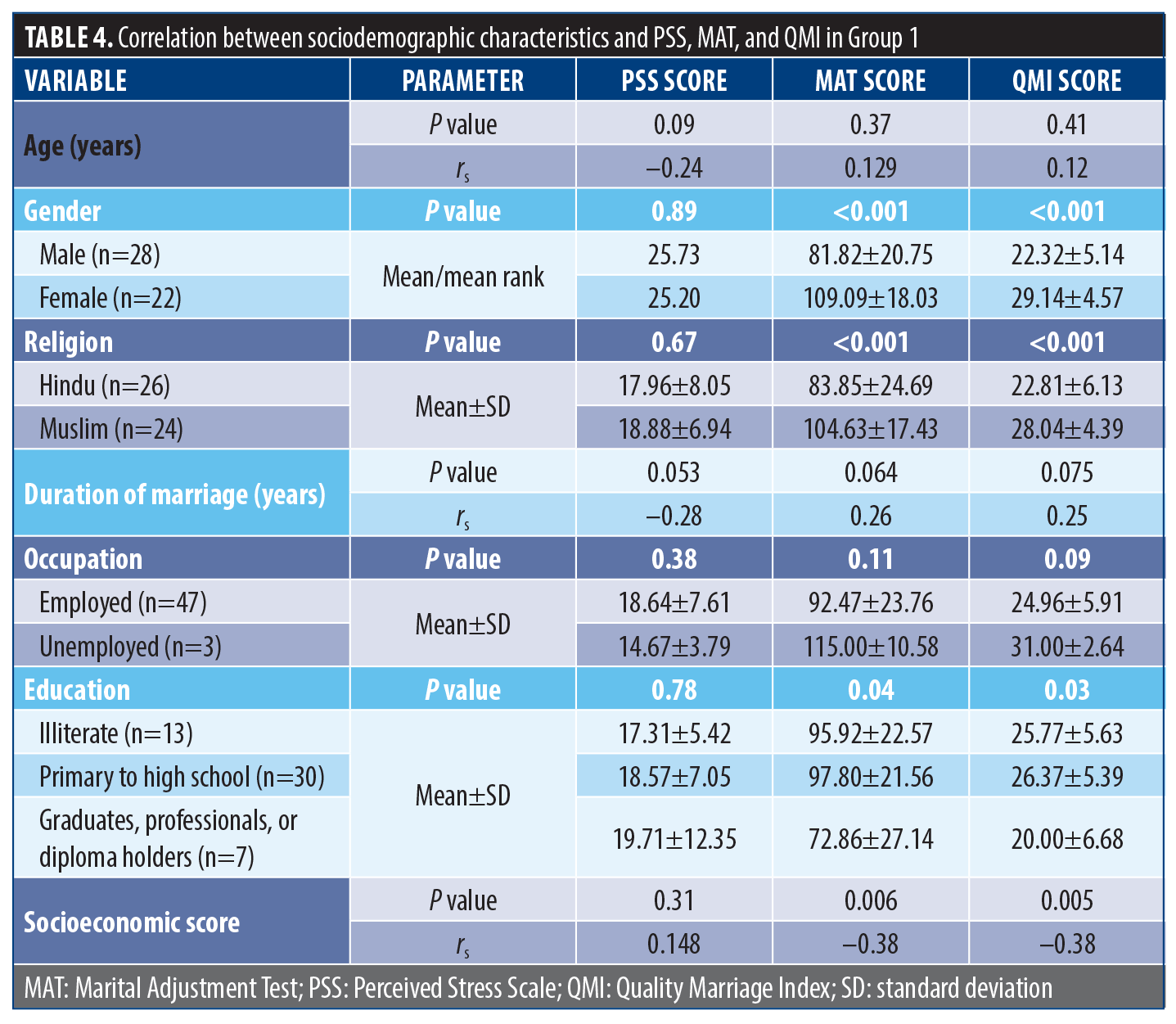
Sex differences were significant for both MAT and QMI scores (P<0.001). Female participants reported higher mean±SD scores (MAT: 109.09±18.03; QMI: 29.14±4.57) compared to male participants (MAT: 81.82±20.75; QMI: 22.32±5.14). A similar pattern emerged with religion, where Muslim participants demonstrated significantly higher mean scores on MAT (104.63±17.43; P<0.001) and QMI (28.04±4.39; P<0.001) compared to Hindu participants (MAT: 83.85±24.69; QMI: 22.81±6.13).
Duration of marriage approached significance for all 3 scales, particularly the PSS (PSS: rs=–0.28; P=0.053; MAT: rs=0.26; P=0.064; QMI: rs=0.25, P=0.075), indicating potential trends. Socioeconomic status showed significant negative correlations with both MAT (rs=–0.38; P=0.006) and QMI scores (rs=–0.38; P=0.005), suggesting that lower socioeconomic status was associated with poorer marital outcomes.
Educational attainment was significantly related to both MAT (P=0.04) and QMI scores (P=0.03). Participants with higher education levels (graduates, professionals, or diploma holders) had lower mean±SD scores on MAT (72.86±27.14) and QMI (20.00±6.68) compared to those with less education.
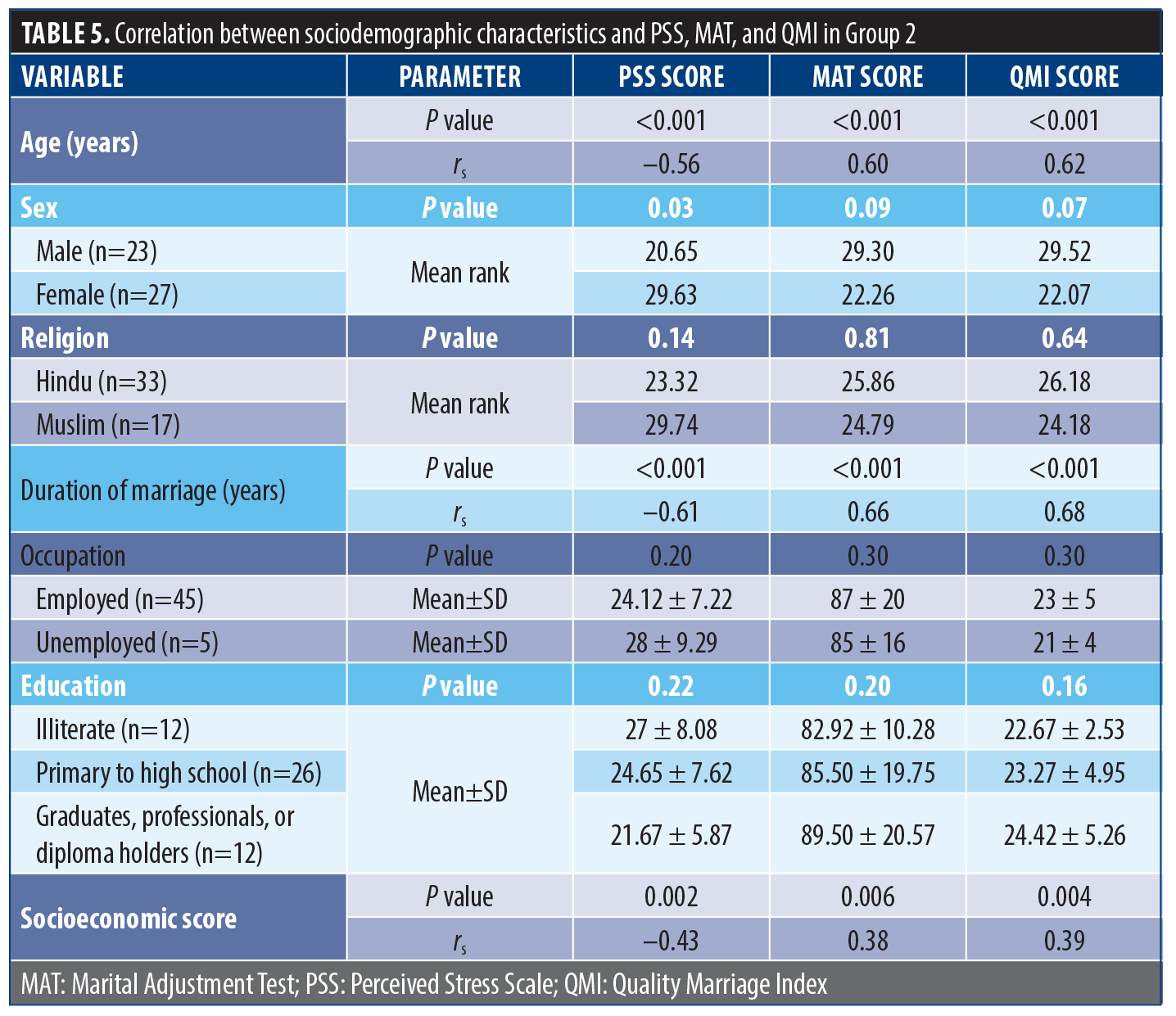
In Group 2, age and duration of marriage emerged as significant factors across all scales (Table 5). Age demonstrated a strong negative correlation with PSS score (rs=–0.56; P<0.001), while its positive correlations with MAT (rs=0.60; P<0.001) and QMI scores (rs=0.62; P<0.001) indicated that older participants reported lower stress levels and better marital outcomes. Similarly, duration of marriage was negatively correlated with PSS score (rs=–0.61; P<0.001) and positively correlated with MAT (rs=0.66; P<0.001) and QMI scores (rs=0.68; P<0.001).
Sex differences reached significance for PSS scores (P=0.03), with female participants showing higher mean ranks (29.63) compared to male participants (20.65). However, sex differences for MAT (P=0.09) and QMI scores (P=0.07) were not statistically significant, although trends suggested slightly better outcomes for male participants. Religion did not significantly influence scores on any of the scales, with Hindu and Muslim participants exhibiting similar mean ranks across MAT and QMI scores.
Socioeconomic status displayed significant correlations with all 3 scales. Lower socioeconomic scores were associated with higher stress levels (rs=–0.43; P=0.002) and poorer marital outcomes (MAT: rs=0.38; P=0.006; QMI: rs=0.39; P=0.004). Educational attainment was not significantly associated with any of the scales (P>0.05), though graduates and diploma holders showed slightly better outcomes for MAT (89.50±20.57) and QMI scores (24.42±5.26) compared to less-educated participants.
Discussion
Schizophrenia and BD are severe mental disorders and are often associated with several negative consequences for patients, their families, and society at large.1 These disorders negatively impact the social functioning of patients, affecting their social relationships. Many patients with BD or schizophrenia get married. Patients with psychiatric disorders, such as BD or schizophrenia, are known to have a relatively higher marital dysfunction in the form of marital discord, divorce, and separation.14 Socioemotional and sexual deficits in the population have been hypothesized to be the reasons for distress among their spouses, leading to marital disharmony.
With rise of nuclear families over the last few decades, spouses often become the primary caregivers for patients with psychiatric disorders. Therefore, the concerns of the spouses need to be understood as this determines the continuation of the caregiver role of spouses. There is limited literature on the subject, especially in India. The little information that is available is based in Western populations, which have different sociocultural factors related to marriage. As a result, it is critical to comprehend the marital issues that exist between the patients and their spouses in a variety of cultural settings.
The current study aimed to assess and compare perceived stress, marital adjustment, and the quality of marital life among spouses of patients with BD or schizophrenia, compare the relationships between these constructs, and evaluate the impact of sociodemographic factors. The findings provide critical insights into these interrelations, shedding light on the challenges faced by these spouses and emphasizing the need for tailored interventions.
The sociodemographic profile of the participants highlighted a predominantly middle-aged cohort, with a balanced sex representation. The findings align with existing literature as Aggarwal et al15 and Mukhopadhyay et al16 reported similar age profile of patients of schizophrenia and their spouses, suggesting that caregiving responsibilities often fall on spouses in the years when they are typically working and raising a family. Most participants belonged to the upper-lower socioeconomic class, with low educational attainment, further highlighting the socioeconomic vulnerabilities inherent in caregiving scenarios. These factors likely compound the stress experienced, as reflected in the high prevalence of moderate-to-severe perceived stress levels among the participants.
Overall, the mean (SD) PSS score of the enrolled subjects was 21.45 (8.03) with a range of 5 to 39. There was a significant difference observed between both groups, with significantly higher stress in spouses of patients with BD than those of patients with schizophrenia. There are many studies on the psychological and social aspects of patients with schizophrenia and their caregivers.15,17 Previous studies from India have used different instruments for evaluating caregiver burden and psychological morbidity. The caregiver liability and relationship studies indicate that the caregiver burden perceived by family members and spouses was similar.18,19 Kumari et al19 evaluated the caregiver burden among partners of patients with schizophrenia and found a reasonable degree of caregiver burden on the spouses. However, other Indian studies by Aggarwal et al15 and Kaushik and Bhatia20 suggest a higher perception of burden by female spouses.21
For spouses of patients with BD, there is limited literature on the subject. A recent systematic review by Azorin et al22 suggests a negative impact on the lives of spouses of patients with BD. The negative influence is primarily manifested in terms of caregiver burden, self-sacrifice, emotional impact and health issues. Furthermore, a lack of concern and details from healthcare practitioners can overestimate this negative influence.
None of the previous studies have compared stress in spouses of patients with schizophrenia and spouses of patients with BD. The finding of relatively higher stress in spouses of patients with BD is intriguing. The mean duration of marriage and age of spouses in schizophrenia group was higher than that in the BD group. Moreover, PSS score had a negative correlation with age and duration of marriage (Table 3). This can explain higher stress in the BD group, with its relatively lower age of spouses and shorter duration of marriage. Furthermore, the difference might be due to different pathophysiology and clinical symptomatology of the disorders. The episodic and sometimes unpredictable nature of BD may impose distinct emotional and logistical challenges on spouses compared with schizophrenia.
Around 60% of participants in the schizophrenia group and 84% in the BD group had marital maladjustment in the current study. Moreover, nearly 72% of participants in the schizophrenia group and 96% in the BD group had poor quality of marriage. Different studies have assessed marital adjustment in schizophrenia using different scales. Hence, the comparison with the findings reported in existing literature is difficult. However, the current study’s outcomes are comparable to previous research. Previous studies suggest that patients with schizophrenia have a significantly higher rate of marital maladjustment than those with affective disorder.23,24 Similarly, Vibha et al10 looked at the marital adjustment of people with depression, schizophrenia, and BD, as well as their spouses. Patients with schizophrenia showed an increased rate of marital dysfunction than patients with an affective illness.
There has been limited research into how BD affects marital structure and function. Most studies have compared the dyadic adjustment of couples in which one spouse has BD with that of healthy couples and have found poorer marital adjustment among couples in which one partner has BD.25,26 Another analysis discovered that 70% of patients with BD had a poor marital relationship satisfaction, which was considerably higher than 50% of those with substance abuse, yet there was no statistically significant distinction between those with schizophrenia (60%).27 Hence, the literature shows conflicting results for schizophrenia and BD in terms of marital adjustment. However, this depends on whether assessment was done in patients, spouses, or both.
The strong negative correlations between perceived stress and marital outcomes across both groups underscore the interconnectedness of these constructs. Early literature on the correlation of caretaking and marital function in BD has discovered that a lower assessment of marital adjustment and functioning is linked to an increased level of caregiver burden.28 Additionally, the moderate-to-strong correlations observed in Group 2 reinforce the disproportionate impact of BD on spousal wellbeing. This suggests that interventions aimed at reducing perceived stress could potentially enhance marital adjustment and quality of life among caregivers.
Age and duration of marriage emerged as pivotal factors influencing stress and marital outcomes across both groups. The study revealed that older participants and those with longer marital durations reported lower stress and better marital outcomes, suggesting that life experience and enduring marital bonds mitigate caregiver stress. This aligns with findings where age and marital stability were linked to improved quality of life and reduced caregiver burden in spouses of patients with schizophrenia or BD.5 However, the weaker protective effect in Group 1 might stem from the more pervasive caregiving demands associated with schizophrenia, consistent with evidence showing higher caregiver distress in chronic schizophrenia cases.29
Sex differences were also observed in the quality of marital life in spouses of psychiatric patients. Female participants in Group 1 reported better marital outcomes, which may reflect stronger caregiving adaptability or support systems. In contrast, higher stress levels among female participants in Group 2 could be linked to increased emotional caregiving demands associated with BD. Prior studies note that caregiving roles and sex significantly influence stress levels, with women often experiencing compounded burdens due to cultural and familial expectations.30 These patterns advocate for the need for sex-sensitive interventions tailored to the caregiving context.31
Religion emerged as a determinant of marital outcomes, with Muslim participants in Group 1 reporting better marital satisfaction than Hindu participants. This might be attributed to stronger community-based support systems within certain religious groups. Similar findings indicate that social support can significantly buffer stress and enhance marital quality in caregivers of patients with mental illness.8 Future research could explore how varying religious practices contribute to caregiving resilience.
The significant role of socioeconomic status in Group 1 is consistent with findings that financial insecurity exacerbates caregiving challenges.5 Interestingly, higher education levels correlated with poorer marital adjustment, which may reflect elevated expectations and a critical awareness of caregiver stress, a phenomenon also noted in prior research.32 However, further exploration is required into how educational interventions might address these disparities.
Strengths and limitations. The study provides a comprehensive comparative analysis of the impact of schizophrenia and BD on spousal wellbeing, a subject with limited exploration, particularly in non-Western sociocultural settings. The inclusion of standardized tools such as the PSS, MAT, and QMI ensures the reliability and validity of the findings. Furthermore, the study’s cross-sectional design offers valuable insights into sociodemographic influences and caregiving stress within real-world contexts.
Although spouses were identified as the primary caregivers, the potential influence of extended family support was not systematically assessed in this study. In sociocultural contexts such as India, extended family members often play a significant role in caregiving by sharing responsibilities, offering emotional reassurance, and providing practical assistance. The presence of such support networks may buffer perceived caregiving stress even when marital quality or adjustment remains poor, as stress reduction does not necessarily translate into improved dyadic marital functioning. Conversely, the absence of extended family support may exacerbate caregiver burden and psychological strain. Additionally, individual personality traits such as resilience, coping style, and emotional regulation may further moderate stress perception and marital outcomes. Future studies should incorporate structured assessments of family support systems and caregiver personality factors to better understand their protective or exacerbating roles in caregiving stress and marital functioning.
However, certain limitations apply to the findings of this study. The cross-sectional design limits causal interpretations of the observed relationships between stress, marital adjustment, and sociodemographic factors. Moreover, the single-center sample may restrict the generalizability of findings to other populations and cultural contexts. Additionally, the relatively small sample size of 100 participants could reduce the statistical power to detect subtle differences or interactions. Unmeasured variables such as personality traits or extended family support might also influence the observed outcomes. Lastly, the reliance on self-reported measures introduces potential biases, including social desirability and recall biases.
An important limitation of the present study is that the timing of marriage in relation to the onset and diagnosis of schizophrenia or BD was not assessed. Whether spouses married before symptom onset or after diagnosis might substantially influence caregiving expectations, psychological preparedness, resilience, and perceived burden. Spouses who enter marriage with prior awareness of the illness may have different coping strategies and marital expectations compared to those confronted with the illness after marriage. Future longitudinal studies should specifically examine the role of premorbid marital timing and illness awareness in shaping stress, marital adjustment, and quality of marital life.
Conclusion
BD and schizophrenia are linked with higher stress, poor marital functioning, and poor quality of marriage in spouses. The study highlights that spouses of patients with BD experience significantly higher stress levels and poorer marital outcomes compared to those of patients with schizophrenia. Moreover, perceived stress is negatively linked with marital outcomes with higher stress leading to worse marital life. Sociodemographic factors, particularly age and duration of marriage, play pivotal roles in shaping these outcomes, suggesting that life experience and long-term marital bonds may serve as protective factors. These findings point to the need for targeted support systems to alleviate stress and enhance marital quality, including stress management programs, financial assistance, and sex-sensitive approaches. Future research should explore longitudinal data and consider additional variables, such as family dynamics and cultural expectations, to deepen the understanding of caregiving challenges and improve outcomes for both spouses and patients.
References
- Srivastava A. Marriage as a perceived panacea to mental illness in India: reality check. Indian J Psychiatry. 2013;55(Suppl 2):S239–S242.
- Avasthi A. Preserve and strengthen family to promote mental health. Indian J Psychiatry. 2010;52(2):113–126.
- Aggarwal S, Grover S, Chakrabarti S. A comparative study evaluating the marital and sexual functioning in patients with schizophrenia and depressive disorders. Asian J Psychiatr. 2019;39:128–134.
- Sahu S, Mujawar S, Garg D, et al. Quality of life and marital adjustment in spouses of schizophrenia patients. Ind Psychiatry J. 2020;29(2):323–328. Epub 2021.
- Fekih-Romdhane F, Ben Ali S, Ghazouani N, et al. Burden in Tunisian family caregivers of older patients with schizophrenia spectrum and bipolar disorders; associations with depression, anxiety, stress, and quality of life. Clin Gerontol. 2020;43(5):545–557.
- World Health Organization. Schizophrenia. 2022. Accessed 19 Aug 2026. https://www.who.int/news-room/fact-sheets/detail/schizophrenia
- Yazici E, Karabulut Ü, Yildiz M, et al. Burden on caregivers of patients with schizophrenia and related factors. Noro Psikiyatr Ars. 2016;53(2):96–101.
- Techi M, MittuMuthu V, Kiran M, Goyal N. Stressful life events, coping, social support, subjective well-being and burnout in primary key caregivers of patients with schizophrenia and bipolar affective disorder in relapse. Int J Sci Res Publ. 2020;10(7):317–343.
- Singh S, Sinha D, Raut N. Caregiving experience and marital adjustment in spouses of patients with schizophrenia. Indian J Soc Psychiatry. 2019;35(2):125.
- Vibha P, Saddichha S, Khan N, Akhtar S. Quality of life and marital adjustment in remitted psychiatric illness: an exploratory study in a rural setting. J Nerv Ment Dis. 2013;201(4):334–338.
- Cohen S, Kamarck T, Mermelstein R. A global measure of perceived stress. J Health Soc Behav. 1983;24(4):385–396.
- Locke HJ, Wallace KM. Short marital-adjustment and prediction tests: their reliability and validity. Marriage Fam Living. 1959;21(3):251–255.
- Norton R. Measuring marital quality: a critical look at the dependent variable. J Marriage Fam. 1983;45(1):141.
- Fava GA. Subclinical symptoms in mood disorders: pathophysiological and therapeutic implications. Psychol Med. 1999;29(1):47–61.
- Aggarwal S, Grover S, Chakrabarti S. Comparison of marital and sexual functioning of the spouses of patients with schizophrenia and depressive disorders. Journal of Psychosexual Health [Internet]. 2021 Apr 5 [cited 2024 Dec 25];3(2):160–70.
- Mukhopadhyay S, Sharma S, Aggarwal A, Kataria D. Perceived stress, marital satisfaction, and sexual satisfaction in spouses of males having bipolar disorder with and without alcohol use disorder. Indian J Psychiatry. 2021;63(3):270–273.
- Chakrabarti S, Kulhara P, Verma SK. Extent and determinants of burden among families of patients with affective disorders. Acta Psychiatr Scand. 1992;86(3):247–252.
- Jungbauer J, Wittmund B, Dietrich S, Angermeyer MC. The disregarded caregivers: subjective burden in spouses of schizophrenia patients. Schizophr Bull. 2004;30(3):665–675.
- Kumari S, Singh AR, Verma AN, et al. Subjective burden on spouses of schizophrenia patients. Ind Psychiatry J. 2009;18(2):97–100.
- Kaushik P, Bhatia MS. Burden and quality of life in spouses of patients with schizophrenia and bipolar disorder. Virtual Health Library. 2013. https://pesquisa.bvsalud.org/portal/resource/pt/sea-173431?lang=en
- Kumar P, Sharma N, Ghai S, Grover S. Perception about marriage among caregivers of patients with schizophrenia and bipolar disorder. Indian J Psychol Med. 2019;41(5):440–447.
- Azorin JM, Lefrere A, Belzeaux R. The impact of bipolar disorder on couple functioning: Implications for care and treatment. A systematic review. Medicina (Kaunas). 2021;57(8):771.
- Burns DD, Sayers SL, Moras K. Intimate relationships and depression: is there a casual connection? J Consult Clin Psychol. 1994;62(5):1033–1043.
- Behere PB, Rao STS, Verma K. Effect of marriage on pre-existing psychoses. Indian J Psychiatry. 2011;53(4):287–288.
- Levkovitz V, Fennig S, Horesh N, et al. Perception of ill spouse and dyadic relationship in couples with affective disorder and those without. J Affect Disord. 2000;58(3):237–240.
- Whisman MA. Marital dissatisfaction and psychiatric disorders: results from the National Comorbidity Survey. J Abnorm Psychol. 1999;108(4):701–706.
- Chaudhury S, Mishra S, Singh A, et al. Marital adjustment of patients with substance dependence, schizophrenia and bipolar affective disorder. Med J of Dr DY Patil University. 2014;7(2):133.
- Borowiecka-Karpiuk J, Dudek D, Siwek M, Jaeschke RR. Spousal burden in partners of patients with major depressive disorder and bipolar disorder. Psychiatr Pol. 2014;48(4):773–787.
- Strunoiu LM, Strunoiu CM, Chirita AL, et al. Factors that impact caregivers of patients with schizophrenia. Curr Health Sci J. 2019;45(3):301–310.
- Shah STH, Sultan SM, Faisal M, Irfan M. Psychological distress among caregivers of patients with schizophrenia. J Ayub Med Coll Abbottabad. 2013;25(3–4):27–30.
- Granek L, Danan D, Bersudsky Y, Osher Y. Living with bipolar disorder: the impact on patients, spouses, and their marital relationship. Bipolar Disord. 2016;18(2):192–199.
- Sharma R, Sharma SC, Pradhan SN. Assessing caregiver burden in caregivers of patients with schizophrenia and bipolar affective disorder in Kathmandu Medical College. J Nepal Health Res Counc. 2018;15(3):258–263.