
Innov Clin Neurosci. 2026;23(7–9):27–31.
Hira Liaqat, PhD; Saima Dawood, PhD; and Neelofar Rehman, PhD
Drs. Liaqat and Dawood are with the Centre for Clinical Psychology, University of the Punjab, Lahore, Pakistan. Dr. Rehman is with the Department of Psychology, Counselling and Therapy, School of Psychology and Public Health, La Trobe University, Australia.
FUNDING: No funding was provided for this article.
DISCLOSURES: The authors have no relevant conflicts of interest.
Abstract: Literature has drawn attention toward the concept of masculinity, in particular hegemonic masculinity, in terms of its application to research during the past 4 decades on men and masculinity.1 Traditional masculinity has been shown to affect women, men, and society at large, in terms of serious negative outcomes.2–5 Limited attention has been paid to the potential impact that traditional masculinity can have on the different aspects of life among men themselves, predominantly in the form of their own perception of role expectancies and mental health. The potential negative outcomes for mental wellbeing among men can expand to their families and, in turn, can pose challenges for the community. With reference to psychological problems, clinical depression in men has been linked to increased anger, substance abuse, aggression, risky behaviors, violence, addiction, and suicidality.6,7,8 Importantly, the association between depression and hostility has been noted in boys and adolescent male individuals, as well as among adult men.9 There has been global attention directed toward the stakes associated with men’s perpetuated violence and the established connection between men’s violence and men’s mental health. Therefore, it becomes critical to explore the issues that can have a contributory role in the decline in mental health among men. This knowledge, when put to use, can pave the way toward promoting mental health of men and potentially become a means for reducing the negative consequences for families and communities.
Masculinity and normative male alexithymia
The role of masculinity in men’s mental health is multifactorial. Men present with complex, diverse, and often contradictory expressions of masculinity that are relevant to their health status.10 Literature suggests that due to being socialized to restrict emotional expressions from very early on in life, through messages from other people, especially teachers and parents, adult men are observed to have difficulty in identifying and expressing their emotions,11 often lacking vocabulary for emotions of vulnerability and affection. The more men conform to traditional masculine behaviors, higher is the difficulty they experience in articulating and expressing their emotions.12 Similarly, Kurian and Levant13 found a significant negative association between traditional masculinity ideology and emotional intelligence among young cisgender heterosexual Indian men. Higher endorsement of traditional masculinity was linked to lower emotional intelligence, with normative male alexithymia (NMA) mediating this relationship, suggesting that rigid masculine norms constrain emotional awareness and expression and underscore the need for culturally sensitive psychoeducational and mental health interventions. Levant et al14 termed the emotional restrictiveness experienced by men as NMA; it is a culturally and socially grounded, gender-specific, and mild form of clinical alexithymia, which is a result of traditional gender role socialization.
Normative male alexithymia and mental health
The impact of clinical alexithymia on men’s mental health, which includes psychological distress and psychological wellbeing, is well documented in the literature.15 However, NMA is a relatively new and less explored construct, with limited empirical studies published. Among the few studies focusing on NMA, Karakis and Levant15 have examined NMA and its relationship with quality of communication, relationship satisfaction, and fear of intimacy in intimate relationships. Their results suggested that NMA was inversely associated with relationship satisfaction and communication quality, and it was seen as directly associated with fear of intimacy. Similarly, in another study, the relationship beyween emotional restrictiveness and quality of life among combat veterans was explored and it was found that NMA was inversely associated with life satisfaction.16 However, no empirical study to date has explored the impact of masculinity and NMA on mental health of men.
Masculinity and mental health
Talking about masculinity and the traits that are considered to be characteristic of traditional masculine behaviours, an accumulating body of literature suggests that men do not feel comfortable talking about their mental health issues.17 Furthermore, they are very reluctant to seek professional help for mental illness.18 Similarly, literature suggests a significant gender difference in attitudes toward seeking professional psychological help, indicating that help-seeking is considered less of a masculine and more of a feminine trait by most men.19 In the same way, mental disorders, such as depression, are likely to be viewed by men as an unmasculine condition.20,21 This could be because men tend to believe that depression is a manifestation of vulnerability and lack of strength and power.22 In light of the discussed literature, it is evident that stereotypic masculine traits can account for denial of mental illness among men, which in turn would increase the likelihood of undiagnosed psychological problems, such as mood disorders or eating disorders.23 Literature highlights that due to shame and stigma attached to seeking help, men tend to withdraw, avoid problems, and do not seek mental health services.22,24,25 Many men who suffer from depression or anxiety turn to other unhealthy coping strategies, for example substance use or abuse and externalizing behaviors, including anger and excessive competitiveness. However, in the long term, these strategies may turn out to be completely unsuccessful, and placed in such situations, men are at a significantly higher risk to commit suicide in the context of depression as compared to women.25
In light of reviewed literature, the present study aimed at investigating NMA as a mediator of the relationship between masculinity and mental health (psychological distress and psychological wellbeing). Hypotheses were as follows: 1) Traditional masculinity and NMA will have a positive association with psychological distress; 2) Traditional masculinity and NMA will have a negative association with psychological wellbeing; 3) The indirect paths from traditional masculinity to mental health (psychological distress and psychological wellbeing), through NMA, will be significant.
Methods
Sample. The sample consisted of young men (n=325) aged between 20 and 30 years (mean: 24.33; standard deviation [SD]: 1.87), enrolled in various academic disciplines at privately owned, semigovernment, and government tertiary educational institutions in Lahore, Pakistan. The majority of participants were undergraduate students (84.9%), while 15.1% were enrolled in master’s programs. With respect to institutional affiliation, 40.9% of the respondents were from private universities, followed by government (32.8%) and semigovernment institutions (26.3%). In terms of living arrangements, 68.5% were day scholars, 28.4% were hostel residents, and 3% reported other living arrangements. The sample was predominantly Muslim (98.3%), with a small representation of Christians (1.7%). Ethnically, the majority identified as Punjabi (85.8%), followed by Pakhtun (6%), Saraiki (3.4%), Muhajir (1.7%), and smaller proportions of Sindhi, Balochi, Gujarati, and Kashmiri participants.
Measures. The following tools were used in the study.
The Masculine Behavior Scale (MBS) was developed by Snell.27 This is a 20-item, 5-point Likert scale assessing the degree of agreement and disagreement among individuals. It is a measure of stereotypical masculine behavior traits, in which the degree of scores correspond to the degree of agreement with stereotypical masculine behavior. The MBS has 4 subscales: (1) success dedication, (2) restrictive emotionality, (3) inhibited affection, and (4) exaggerated self-reliance and control, with a good reliability (α=0.86).
The Normative Male Alexithymia Scale (NMAS) is a brief, unifactor scale of 20 items developed to assess NMA.11 The scale demonstrates good reliability (α=0.80). The higher scores indicate higher NMA, and lower scores indicate lower NMA.
The Mental Health Inventory (MHI) is a self-reported measure consisting of 38 items, initially developed for a National Health Survey Study.26 Later, it was widely used with different populations. The items of the MHI are framed to inquire about the symptoms experienced by a person during the last month. The scoring of the MHI is on a 6-point Likert scale. It consists of 2 global scales, psychological wellbeing and psychological distress, and this scale demonstrates a good reliability (α=0.79)
A brief demographic questionnaire was developed specific to the study. It comprised of demographic questions pertaining to the participant’s age, education, birth order, marital status, and past psychiatric history.
Procedure. After fulfilling the ethical requirements, the questionnaire was tested on 8 participants, after which the data collection commenced and students from different tertiary education institutions were approached directly. The participants were given the information pro forma about the study and the consent form in person. It was clearly stated in the information that the data will be stored confidentially and that they could withdraw from the research at any point without providing any reason. No incentive or monetary benefit was offered to the participants in return as a compensation for their participation.
Data analysis strategy. SPSS (Version 21) was used to run descriptive statistics, correlation analysis, and mediation. Correlation analysis was used to determine the association between masculinity, NMA, psychological wellbeing, and psychological distress. Mediation analysis was done using Process28 to assess the mediating role of NMA between masculinity and mental health (psychological distress and psychological wellbeing).
Ethics statement. This research was approved by Department Doctoral Program Committee of Centre for Clinical Psychology, University of the Punjab, Pakistan. Permission to use and translate questionnaires was granted from the respective authors. Permission from the all concerned authorities to collect data was sought. Informed consent of the participants was obtained, and participants were assured about the confidentiality of their information.
Results
Screening of the data revealed that it was normally distributed with few missing points, which were handled, and no significant outliers were detected. The following section presents the results.
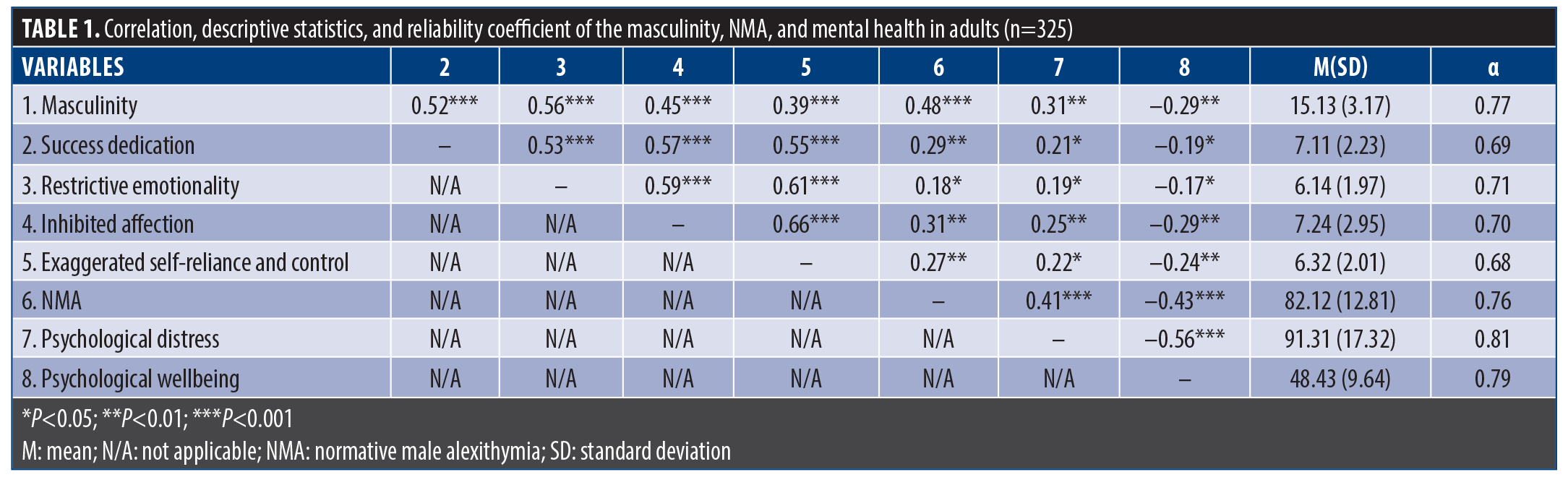
In Table 1, correlation analysis showed that masculinity on the whole and the subscales of success dedication, restrictive emotionality, inhibited affection, and exaggerated self-reliance and control were found to be significantly positively correlated with NMA and psychological distress, while being significantly negatively correlated with psychological wellbeing. NMA was found to be directly associated with psychological distress and inversely associated with psychological wellbeing. These findings supported the first 2 hypotheses.
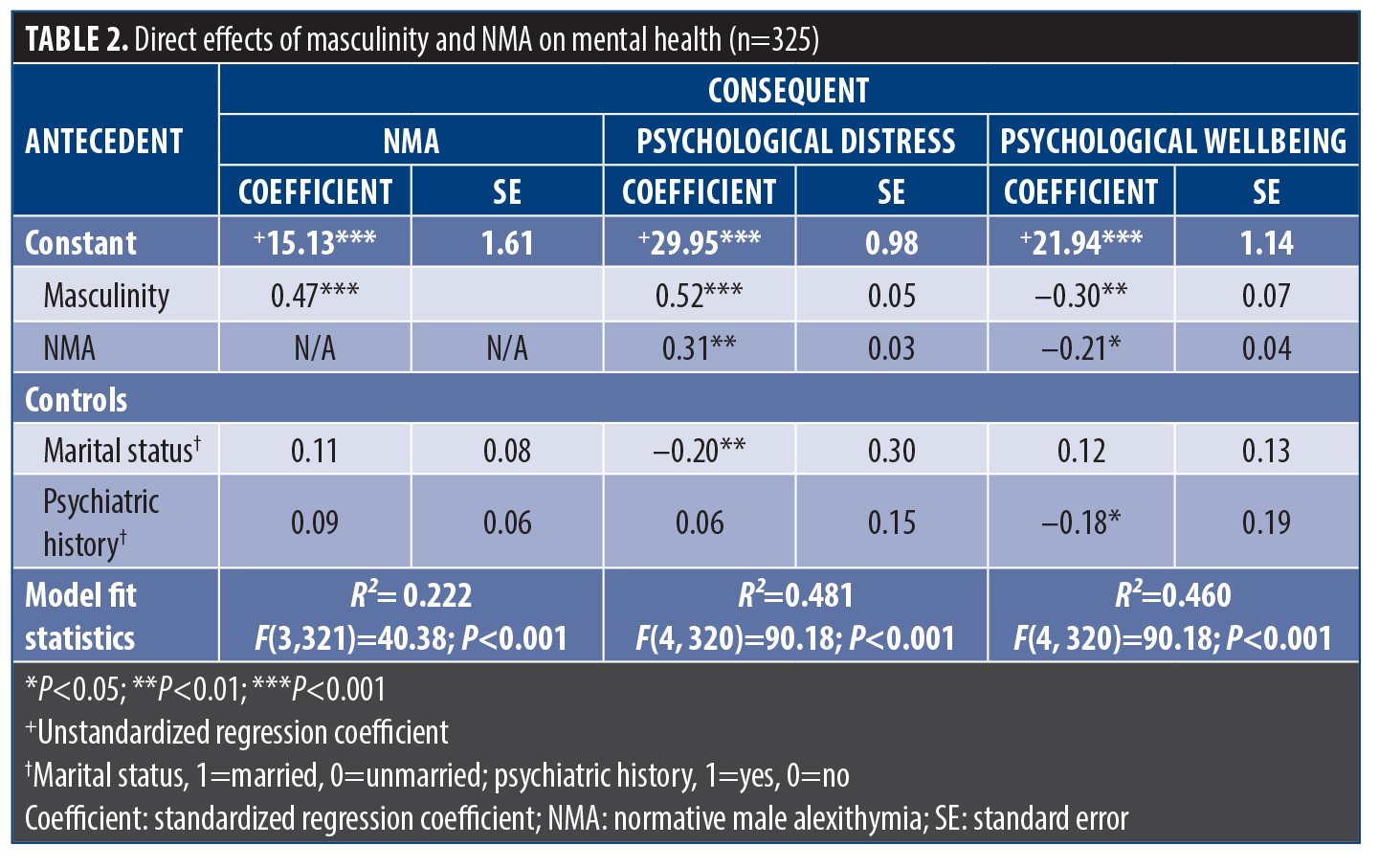
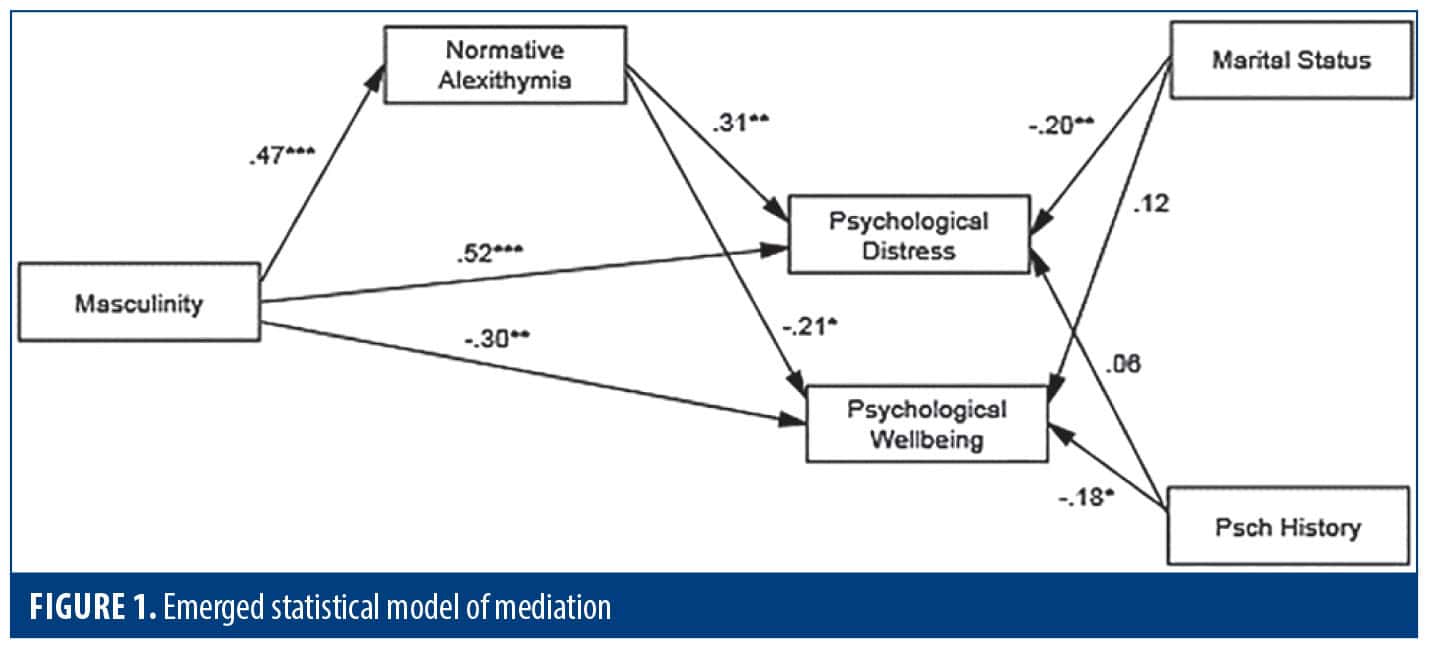
Mediation analysis was carried out to assess the mediating role of NMA between masculinity and mental health (psychological distress and psychological wellbeing) by using SPSS Process macro v3.4 by Hayes.29 The results of direct effect showed that masculinity was a significant and positive predictor of NMA and psychological distress while it was found to be significant but negative predictor of psychological wellbeing. NMA significantly positively predicted psychological distress and significantly negatively predicted psychological wellbeing (Table 2).
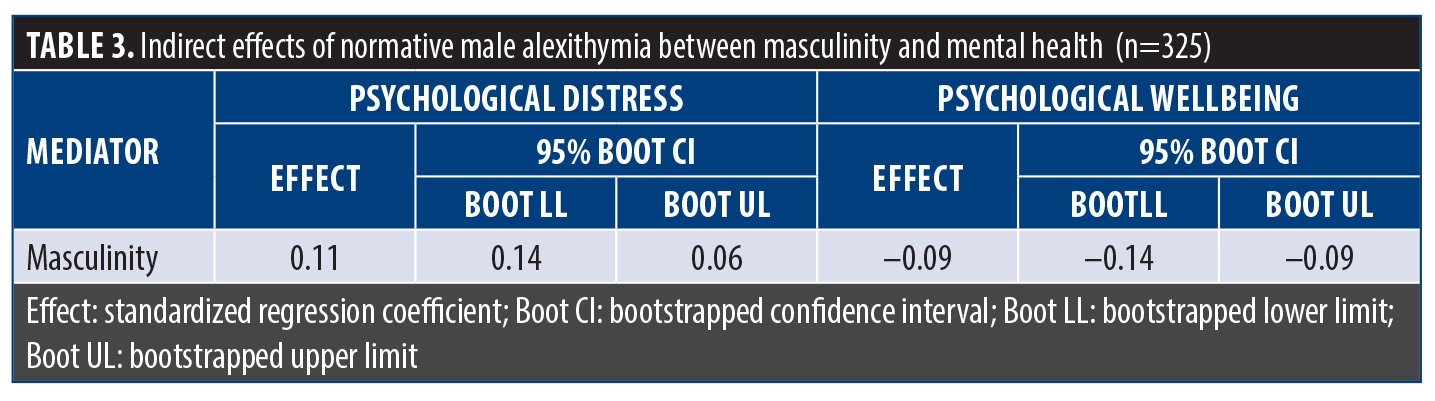
The results of indirect effect showed that NMA was a significant positive mediator between masculinity and psychological distress, which further showed that an increase in masculinity tends to increase NMA, while NMA in turn increases psychological distress. The analysis highlighted that NMA was a significant negative mediator between masculinity and psychological wellbeing, indicating that an increase in masculinity tends to increase NMA, while NMA in turn decreases psychological wellbeing (Table 3).
Discussion
This study aimed at investigating the relationship between masculinity, NMA, and mental health in young men. The mediating role of NMA in the relationship of masculinity and mental health was also explored.
The present findings suggest a positive association between traditional masculinity, NMA, and psychological distress, which is consistent with the previous literature.10,28,29 Masculinity explained significant variance in alexithymia even when the other demographic variables had been controlled.29 By highlighting the role of masculinity and NMA on mental health, the findings of the present study provide evidence for the long held proposition that men’s adherence to stereotypic masculine beliefs and restrictive emotionality can have direct consequences for their mental health.
Moreover, the present study revealed that with the increase in NMA, psychological distress also increases. To the best of the researchers’ knowledge, no research to date has been published on the aforementioned, but similar results have been documented for clinical alexithymia (among male and female individuals) where the literature provided the evidence that individuals with high alexithymia experience more distress as compared to individuals with low or no alexithymia.32,33 Based on the available literature of clinical alexithymia and findings of the present study, it can be concluded that NMA is by definition less severe than clinical alexithymia but it has similar impact on psychological wellbeing and mental health of men.33,34
Conclusion
Based on the present study, it can be concluded that male individuals with traditional or stereotypical beliefs of masculinity are more prone to experience difficulty in expressing their emotions as compared to those who do not conform to the traditional masculine norms. Moreover, masculinity interacts with NMA to exacerbate psychological distress and decrease psychological wellbeing. However, in-depth understanding of the role of masculinity and emotional expression is vital for addressing the diverse nature of mental health issues of men, especially from Eastern and subcontinent culture.
The present study has important implications for research and clinical practices through highlighting the problems associated with the expression of emotions in the form of restrictive emotionality, inhibited affect, and exaggerated self-reliance and control among men. The findings also point in the direction of possible negative consequences in the form of experienced distress and compromised wellbeing among men. In Pakistan and the Southeast Asian subcontinent, where patriarchal culture prevails, there are more studies conducted on women’s psychological issues and there is a need to have more research done to explore men’s mental health. This will help to have a better understanding of the intricate phenomenon associated with men’s mental health and aid the health system in designing and implementing better mental health programs to intervene before men’s psychological issues evolve into greater problems, leading to negative individual and systemic outcomes for men in the form of adopting unhealthy coping skills such as substance use, avoidance, and in severe cases, leading to suicide and acts of domestic violence, and for women in the form of prolonged distress caused by being around men with mental health issues and in serious cases being victims of domestic violence. There is strong empirical evidence emphasizing the negative consequences of undiagnosed mental illness among men.35 Therefore, its recommended that psychological treatments and early intervention/prevention programs should explicitly address beliefs about stereotypical roles assigned to men or women. It is also suggested that planning and implementation of interventions needs to take into consideration that people with alexithymia usually lack the ability to express their vulnerabilities,32 and thus often either avoid seeking help or withdraw from treatment. Programs such as alexithymia reduction treatment35 can be adapted to improve the psychological wellbeing of men.
Implications of the study. Men may generally be less emotionally expressive than women, a difference often attributed to masculine norms that may contribute to men engaging in health-deteriorating behaviors. These culturally reinforced beliefs about masculinity have significant implications for both physical and mental health, warranting deeper investigation. Emerging insights highlight that men’s internalized beliefs about masculinity directly impact their mental wellbeing. Stereotypical masculine behaviors, such as emotional suppression and self-reliance, pose substantial risks to mental health. Furthermore, the concept of NMA (ie, a socialized pattern of restricted emotional expression) further explains the prevalence of poor mental health outcomes among men.
Limitations. The present study was conducted with educated young men studying in tertiary educational institutions in Pakistan. Being a lower middle income country with varying education and literacy levels and differing ethnic backgrounds, the sample of the current study has a relatively limited generalizability, so further studies need to be conducted with young men coming from diverse backgrounds. This may help deepen our understanding of the impact of variables such as literacy, ethnicity, socioeconomic status, and other demographic factors with regard to stereotypes associated with being a man or a woman. Nonetheless, the present study has taken the initial step of investigating the important connection between masculinity and mental health among a cultural group where much more research is needed to add to the existing literature on the various factors that play a critical role in men’s mental health with the potential of systemic impact on a family and a society.
References
- Connell RW, Messerschmidt JW. Hegemonic masculinity: rethinking the concept. Gender Soc. 2005;19(6):829–859.
- Jenney A, Exner-Cortens D. Toxic masculinity and mental health in young women. Affilia. 2018;33(3):410–417.
- McDermott RC, Kilmartin C, McKelvey DK, Kridel MM. College male sexual assault of women and the psychology of men: past, present, and future directions for research. Psychol Men Masc. 2015;16(4):355–366.
- Mabrouk M. Toxic white masculinity: literary and cinematic representations of terrorism and antagonistic masculinities in Colonial Algeria and 9/11 United States. Thesis. University of Alberta; 2017.
- Haider S. The shooting in Orlando, terrorism or toxic masculinity (or both?). Men Masc. 2016;19(5):555–565.
- Wålinder J, Rutz W. Male depression and suicide. Int Clin Psychopharmacol. 2001;16(Suppl 2):S21–S24.
- Winkler D, Pjrek E, Kasper S. Anger attacks in depression: evidence for a male depressive syndrome. Psychother Psychosom. 2005;74(5):303–307.
- Guvensel K, Dixon A, Chang C, Dew B. The relationship among gender role conflict, normative male alexithymia, men’s friendship discords with other men, and psychological well-being. J Men’s Stud. 2017;26(1):56–76.
- Treuting JJ, Hinshaw SP. Depression and self-esteem in boys with attention-deficit/hyperactivity disorder: associations with comorbid aggression and explanatory attributional mechanisms. J Abnorm Child Psychol. 2001;29(1):23–39.
- Seidler ZE, Rice SM, Dhillon HM, Herrman H. Why it’s time to focus on masculinity in mental health training and clinical practice. Australas Psychiatry. 2018;27(2):157–159.
- Levant RF. The new psychology of men. Prof Psychol Res Pract. 1996;27(3):259–265.
- Levant RF, et al. The normative male alexithymia scale: measurement of a gender-linked syndrome. Psychol Men Masc. 2006;8(3):199–200.
- Kurian MJ, Levant RF. The mediating role of normative male alexithymia on the relationship between traditional masculinity ideology and emotional intelligence among Indian men. J Men’s Stud. 2025;34(2):223–243.
- Levant RF, Richmond K, Majors RG, et al. A multicultural investigation of masculinity ideology and alexithymia. Psychol Men Masc. 2003;4(2):91–99.
- Karakis EN, Levant RF. Is normative male alexithymia associated with relationship satisfaction, fear of intimacy and communication quality among men in relationships? J Men’s Stud. 2012;20(3):
179–186. - Juanto Laver NEJ. The effect of masculinity on post-deployment veterans’ help-seeking behaviors and mental health outcomes. Dissertation. University of North Dakota; 2013. Accessed 4 Sep 2026. https://commons.und.edu/theses/1445
- Warner BJ. The relationship between alexithymia, wellness, and substance dependence. Dissertation. University of New Orleans; 2007. Accessed 17 Aug 2026. https://scholarworks.uno.edu/td/560/
- Cusack J, Deane FP, Wilson CJ, Ciarrochi J. Emotional expression, perceptions of therapy, and help-seeking intentions in men attending therapy services. Psychol Men Masc. 2006;7(2):69–82.
- O’Brien R, Hunt K, Hart G. “It’s caveman stuff, but that is to a certain extent how guys still operate”: men’s accounts of masculinity and help-seeking. Soc Sci Med. 2005;61(3):
503–516. - Mackenzie CS, Gekoski WL, Knox VJ. Age, gender, and the underutilization of mental health services: the influence of help-seeking attitudes. Aging Ment Health. 2006;10(6):
574–582. - Branney P, White A. Big boys don’t cry: depression and men. Adv Psychiatr Treat. 2008;14(4):256–262.
- Riska E. Men’s mental health. In: Broom A, Tovey P, eds. Men’s Health: Body, Identity, and Social Context. Wiley-Blackwell; 2009:
145–162. - Oliffe JL, Ogrodniczuk JS, Bottorff JL, et al. “You feel like you can’t live anymore”: suicide from the perspectives of Canadian men who experience depression. Soc Sci Med. 2012;74(4):506–514.
- Griffiths S, Mond JM, Li Z, et al. Self-stigma of seeking treatment and being male predict an increased likelihood of having an undiagnosed eating disorder. Int J Eat Disord. 2015;48(6):775–778.
- Addis ME. Gender and depression in men. Clin Psychol Sci Pract. 2008;15(3):153–168.
- Erentzen C, Quinlan JA, Mar RA. Sometimes you need more than a wingman: masculinity, femininity, and the role of humor in men’s mental health help-seeking campaigns. J Soc Clin Psychol. 2018;37(2):128–157.
- Snell WE Jr. Development and validation of the masculine behavior scale: a measure of behaviors stereotypically attributed to males vs. females. Sex Roles. 1989;21(11–12):
749–767. - Veit CT, Ware JE. The structure of psychological distress and well-being in general populations. J Consult Clin Psychol. 1983;51(5):730–742.
- Hayes AF. Introduction to mediation, moderation, and conditional process analysis: a regression-based approach. 2nd ed. The Guilford Press; 2017.
- Vanheule S, Desmet M, Meganck R, Bogaerts S. Alexithymia and interpersonal problems. J Clin Psychol. 2007;63(1):109–117.
- Zarei J, Besharat MA. Alexithymia and interpersonal problems. Procedia Soc Behav Sci. 2010;5:619–622.
- Hoagland DL, Levant RF. Social class as a moderator of the relationship between normative male alexithymia and relationship satisfaction. University of Akron, Williams Honors College, Honors Research Projects; 2015. Report No.: 51.
- Berke DS, Reidy DE, Zeichner A. Masculinity, emotion regulation, and psychopathology: a critical review and integrated model. Clin Psychol Rev. 2018;66:106–116.
- Coen SE, Oliffe JL, Johnson JL, Kelly MT. Looking for Mr. PG: masculinities and men’s depression in a northern resource-based Canadian community. Health Place. 2013;21:94–101.
- Levant RF, Halter MJ, Hayden EW, Williams CM. The efficacy of alexithymia reduction treatment: a pilot study. J Men’s Stud. 2009;17(1):75–84.